
Blog
New Mexico appraisal well to test waterless geothermal
Estimated reading time: 5 minutes · Last updated:
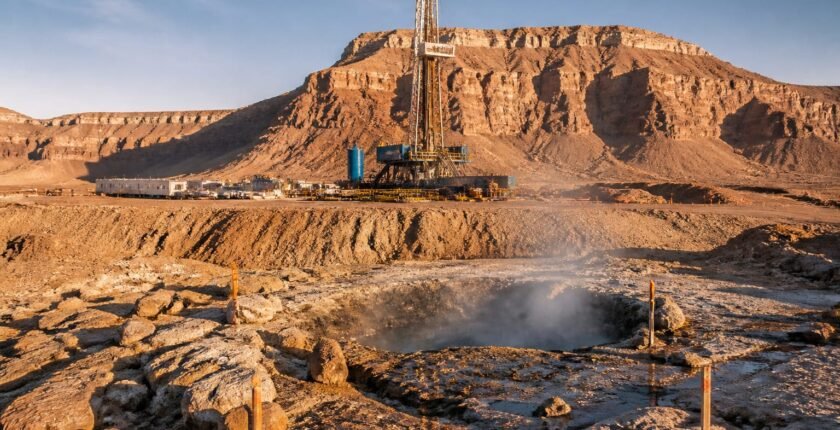
XGS Energy will drill a deep vertical appraisal well in New Mexico to collect downhole temperature measurements, core samples and continuous drilling data that will inform designs for a closed-loop, waterless geothermal system. The project was selected under a $99 million U.S. Department of Energy programme that covers 21 geothermal projects nationwide, and XGS will work with Baker Hughes, New Mexico Tech and Sandia National Laboratories to run the appraisal. The detail behind the selection and the project’s scope are as first reported by Interesting Engineering.
New Mexico sits on a substantial and exciting geothermal resource, and we’re grateful to the Department of Energy for investing in the subsurface data needed to transform our nation’s abundant geothermal resources into affordable, reliable American energy.
Lucy Darago, chief commercial officer of XGS Energy
Key takeaways
- Federal programme: The U.S. Department of Energy selection is part of a $99 million programme covering 21 geothermal projects.
- Project type: XGS Energy will drill an appraisal well in New Mexico to gather downhole temperature measurements, logging information and core samples.
- Waterless design: XGS’s closed-loop design circulates a heat-transfer fluid inside sealed wellbores and does not consume native groundwater.
- Partners named: Baker Hughes, New Mexico Tech, the New Mexico Bureau of Geology and Mineral Resources and Sandia National Laboratories are listed as project partners.
Table of contents
How the closed-loop approach separates heat from groundwater
XGS Energy says its system is a closed-loop design that moves a heat-transfer fluid inside sealed wellbores so the fluid absorbs heat from hot rock instead of relying on naturally occurring hot groundwater.
That design matters in arid regions such as parts of New Mexico because it reduces reliance on underground water, which conventional geothermal plants need for heat transport or reservoir stimulation. By avoiding groundwater extraction, the closed-loop approach can open up hot-rock resources where water is scarce while also changing permitting and resource management calculations for developers and regulators.
The trade-off is engineering complexity: heat transfer across well casings and into a contained fluid can require deeper drilling, tighter thermal models and specialized materials to sustain temperature and pressure. The appraisal well will supply the site-specific thermal and geological data XGS says it needs to model those trade-offs for future commercial wells.
What the New Mexico appraisal well will measure and why it matters
The upcoming well is an appraisal hole rather than a commercial production well; its purpose is to obtain continuous drilling records, downhole temperature profiles and core samples. Those temperature measurements and cores allow mapping of how heat and rock properties vary with depth, and the resulting data feed the thermal and geological models used to size closed-loop wells and estimate output.
Logging information and continuous drilling metrics will also help the team assess drilling efficiency and cost drivers at the site. Sandia National Laboratories is cited for contributing drilling-technology and drilling-efficiency expertise, and Baker Hughes will bring formation evaluation and drilling operations capability—data that matter to project economics and schedule.
Putting those datasets together reduces uncertainty ahead of a commercial decision: accurate temperature profiles and rock strength data lower the odds of costly redesigns, and better drilling performance data can reduce per-foot costs. The appraisal well therefore acts as a targeted engineering investment to decide whether larger, commercial-scale deployments are viable in the region.
Partners, funding status and the next administrative steps
XGS Energy, a Houston-based geothermal developer, will lead the drilling in partnership with Baker Hughes, New Mexico Tech, the New Mexico Bureau of Geology and Mineral Resources, and Sandia National Laboratories. Lucy Darago, chief commercial officer of XGS Energy, and Al Vickers, chief operating officer of XGS Energy, spoke for the company about its objectives and the planned appraisal work.
The Department of Energy selected XGS for federal funding under the $99 million programme, but selection does not equal a signed award: the company must enter award negotiations with the department and DOE may cancel negotiations or withdraw the selection before funds are issued. That administrative step is central to whether the appraisal well receives federal money and on what schedule.
New Mexico Tech is named as contributing regional geological and geothermal expertise and intends to use project experience for workforce training, including its geothermal certificate programme. The partnership mix combines private drilling and industrial capability with national-lab drilling research and regional academic support, designed to move a concept toward operational readiness if the appraisal results and award negotiations proceed positively.
How this project could scale — the two sides
The case for
- If the appraisal yields robust temperature profiles and manageable drilling costs, closed-loop systems could unlock hot rock in water-scarce areas and extend geothermal to new regions.
- Partnering with Sandia and Baker Hughes may accelerate drilling efficiency gains and reduce per-well costs, improving commercial viability for XGS and similar developers.
The case against
- If temperatures, rock conductivity or drilling costs fall short of modelled expectations, the economics of closed-loop wells may not support commercial builds even with federal support.
- DOE’s selection must clear award negotiations; DOE could withdraw the selection or require additional conditions that delay or reduce federal funding for the appraisal well.
What to be careful about
- The appraisal well may not encounter sufficient heat or transmissive rock at budgeted depths, leaving uncertainty about viable commercial output.
- Selection by DOE is conditional; funding depends on successful award negotiations and can be cancelled before money is issued.
- Closed-loop designs can increase engineering and materials costs relative to conventional hydrothermal projects, potentially offsetting benefits from water independence.
- Local permitting, land access or subsurface rights complications in New Mexico could delay drilling or add unexpected costs.
The bottom line
The New Mexico appraisal well is a targeted technical step toward deploying closed-loop, waterless geothermal where hot rock exists but groundwater is scarce. The $99 million DOE programme and the named partners—Baker Hughes, New Mexico Tech and Sandia—supply the financial and technical framework, yet the project’s progress still hinges on successful award negotiations and on-site drilling results. The appraisal data will determine whether XGS’s water-independent approach can scale economically in the region or whether further design and cost reductions are needed before commercial builds proceed.
What to watch
- Watch for DOE’s final award decision on this XGS selection; no date has been set.
- Watch for the start of drilling on the New Mexico appraisal well; no date has been set.
- Watch for release of the appraisal data—downhole temperature measurements and core results; no date has been set.
Frequently asked questions
What is a closed-loop, waterless geothermal system?
XGS characterizes its closed-loop approach as running a working fluid within isolated wellbores so the fluid takes on heat from the surrounding formation while leaving native groundwater in place, which XGS says separates production from dependence on natural water resources.
Who is funding and partnering on the New Mexico appraisal well?
The project was selected under a $99 million U.S. Department of Energy programme covering 21 projects, and XGS will work with Baker Hughes, New Mexico Tech, the New Mexico Bureau of Geology and Mineral Resources and Sandia National Laboratories.
What data will the appraisal well collect?
The well will gather continuous drilling records, core samples, downhole temperature profiles and logging data to improve thermal and geological models for designing future wells.
Does DOE selection guarantee XGS will receive funds?
No; XGS must still complete award negotiations with the U.S. Department of Energy, and the Department of Energy retains the right to cancel negotiations or rescind the selection before any funding is released.
Related reading