
Blog
NEU and ACI Launch Low-Carbon Concrete Certificate
Estimated reading time: 5 minutes · Last updated:
NEU and ACI University have launched a new low-carbon concrete certificate aimed at concrete professionals who design, specify or build infrastructure, including energy projects. The Low-Carbon Concrete: Fundamentals, Materials, and Innovations certificate covers the carbon footprint of concrete and cement, lifecycle choices and strategies to reduce emissions through material selection, design and placement. The program examines lower-carbon alternatives to portland cement binders, their performance and limitations, and it addresses specification and verification challenges. The launch was announced by NEU and ACI University, as first reported by American Concrete Institute.
Key takeaways
- Program launched: NEU and ACI University launched the Low-Carbon Concrete: Fundamentals, Materials, and Innovations certificate.
- Curriculum focus: The course covers carbon footprint and lifecycle considerations, material selection, design and placement strategies.
- Binder alternatives: The certificate examines lower-carbon alternatives to portland cement binders, including their performance and availability.
- Related NEU work: The new certificate complements NEU's existing Low-Carbon Concrete: Qualification, Design, and Compliance program and follows topics in The Low-Carbon Concrete Guide: Materials.
Table of contents
What the certificate teaches concrete professionals
NEU and ACI University designed the Low-Carbon Concrete: Fundamentals, Materials, and Innovations certificate to give practising engineers, specifiers and contractors a practical map of where embodied emissions arise and how to reduce them. The program lays out lifecycle considerations for concrete and cement, and it links those lifecycle stages to choices in mix design, materials sourcing and construction sequencing.
Course modules look at lower-carbon binder options, aggregate selection and admixtures; they assess the trade-offs between strength, durability and carbon reduction potential. The curriculum also covers specification language and verification steps that project teams must use to ensure a claimed emissions reduction is real and measurable.
Low-Carbon Concrete: Fundamentals, Materials, and Innovations is presented as a technical, practice-oriented certificate rather than a policy primer, so attendees should expect detailed material comparisons and guidance on implementing lower-carbon mixes on real projects.
How the course fits NEU's existing offerings
NEU positions this new certificate as complementary to its Low-Carbon Concrete: Qualification, Design, and Compliance program. Where the qualification and compliance offering focuses on meeting regulatory or procurement requirements, the new Fundamentals course targets the material- and design-level decisions that produce those outcomes.
The launch also follows NEU's The Low-Carbon Concrete Guide: Materials, which the organization has used to assemble baseline data and assessments of binder alternatives. Together, the guide, the qualification program and the new certificate form a sequence: background data, compliance pathways, and hands-on material and design guidance.
For firms that already engage with NEU guidance, the certificate is a practical next step intended to embed lower-carbon choices into procurement, mix design and on-site placement practices rather than leaving those choices to post-specification adjustments.
Why wind-energy builders should pay attention
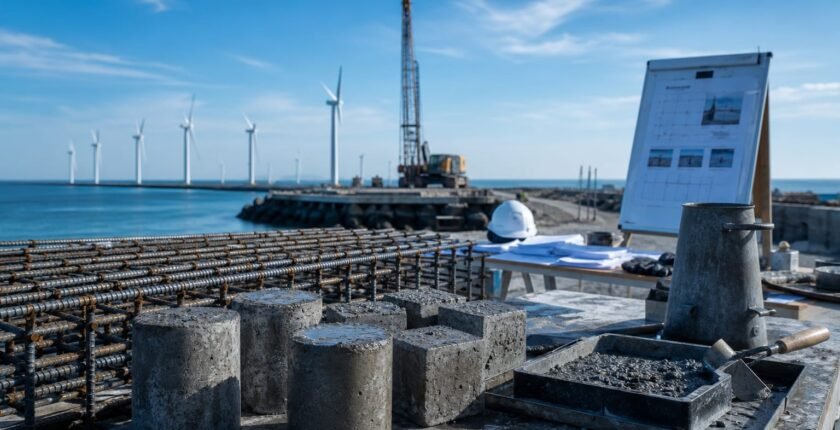
Concrete foundations and hardstands are a core material input for onshore and many offshore wind installations, so lowering concrete's embodied carbon can cut total project emissions without changing turbine hardware. The certificate gives designers and contractors tools to compare binders, qualify mixes and write specifications that preserve durability while reducing carbon intensity.
Practitioners on wind projects will find material on placement strategies and verification especially relevant: foundation pours are often large, single-event placements where mix performance and quality control matter for decades. The course content aims to help project teams adopt lower-carbon mixes while managing constructability and long-term performance.
NEU and ACI University do not tie the program to a single sector, but the technical focus on binder alternatives, availability and specification makes it directly applicable to wind-energy foundations and site infrastructure where concrete volume and lifecycle emissions are significant design variables.
Implementation challenges the certificate addresses
NEU and ACI University highlight limitations and availability of lower-carbon materials as practical hurdles for adoption. The course examines how supply constraints for certain binders or SCMs (supplementary cementitious materials) can force trade-offs between emissions targets and schedule or cost.
Specification and verification are recurring themes: the program walks through how to write contract language that requires measured emissions outcomes, and it outlines verification steps owners and contractors can adopt to avoid greenwashing. It also discusses placement and curing strategies that preserve durability when designers reduce clinker content or add alternative binders.
By focusing on concrete properties, on-site practice and measurable verification, the certificate aims to reduce the implementation gap between ambitious sustainability goals and the on-the-ground realities of large pours, variable supply and project timelines.
How the program could change practice
The case for
- Wider adoption of the course could speed uptake of lower-carbon mixes by giving designers and contractors a shared technical reference and specification language.
- Improved verification practices taught in the certificate could reduce claims that lack measurable emissions outcomes and increase owner confidence in low-carbon bids.
- Sector-specific application—such as to wind foundations—could concentrate demand for low-carbon binders, encouraging suppliers to scale production and improve availability.
The case against
- Limited availability of certain lower-carbon binders and SCMs may restrict adoption on projects with tight schedules or remote sites.
- If verification requirements are inconsistent across owners and jurisdictions, contractors may face higher compliance costs without commensurate market recognition.
- The course does not itself create supply chains or credits, so technical knowledge alone may not overcome commercial barriers to broader use.
What to be careful about
- Supply constraints for lower-carbon binders could force projects to abandon intended mixes despite training.
- Inconsistent specification language across owners could create legal disputes when performance or emissions outcomes differ from expectations.
- Verification processes that are onerous or unclear may discourage contractors from adopting lower-carbon mixes on tight-margin projects.
The bottom line
The NEU and ACI University certificate is a technical, practice-focused offering aimed at narrowing the gap between low-carbon intent and on-site execution. By concentrating on binder choices, mix performance and verification steps, the program targets the precise decisions that determine a concrete installation's embodied emissions. For wind-energy projects—where foundation volumes are large—those choices matter. Practitioners should track NEU and ACI University for course dates and enrollment details so teams can align training with procurement and supplier availability.
What to watch
- Watch for NEU or ACI University to publish course dates and enrollment details; no date has been set.
- Watch for an updated schedule or expanded modules that tailor the certificate to infrastructure sectors such as wind-energy foundations; no date has been set.
Frequently asked questions
Who runs the low-carbon concrete certificate?
NEU and ACI University jointly run the Low-Carbon Concrete: Fundamentals, Materials, and Innovations certificate; the launch and syllabus were announced by the American Concrete Institute.
What topics does the certificate cover?
The course covers the carbon footprint of concrete and cement, lifecycle considerations, lower-carbon binder options, design and placement strategies, and specification and verification considerations.
How is this relevant to wind-energy construction?
Because foundations and hardstands use large concrete volumes, the certificate's focus on binder alternatives, placement practices and verification helps wind project teams reduce embodied emissions without changing turbine equipment.
Related reading