
Blog
Arunachal Emerging as India’s Hydropower Powerhouse
Estimated reading time: 5 minutes · Last updated:
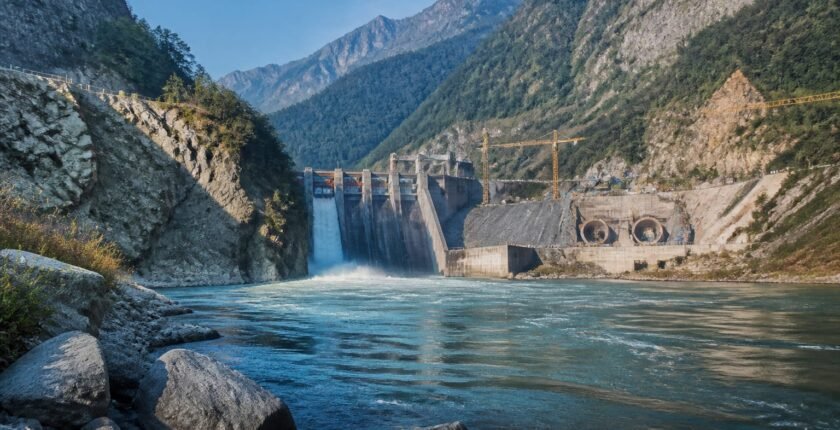
Arunachal Pradesh is positioning itself as a major hydropower centre, the senior official in the Chief Minister’s Office said, after four units of the 2,000 MW Subansiri Lower Hydroelectric Project were commissioned and the remaining units were reported to be near commissioning. The official told reporters the state has secured approvals exceeding Rs 52,000 crore for five additional hydropower projects expected to add nearly 4,000 MW of capacity. As first reported by IANS, the senior official said these steps will strengthen India’s clean-energy capacity and contribute to national net-zero goals.
Prime Minister Narendra Modi took oath as Chief Minister of Gujarat on October 7, 2001, and continued through his service as Prime Minister of India from May 26, 2014 onwards.
official statement
Key takeaways
- Subansiri commissioning: Four units of the 2,000 MW Subansiri Lower Hydroelectric Project have been commissioned; remaining units are expected to follow shortly.
- Project cost: The Subansiri Lower project was developed at a cost of Rs 30,071 crore, the state official said.
- New approvals: More than Rs 52,000 crore of investment has been approved for five additional hydropower projects expected to generate nearly 4,000 MW.
Table of contents
Subansiri Lower: commissioning, cost and status
The state’s senior official in the Chief Minister’s Office said four generating units of the Subansiri Lower Hydroelectric Project have begun commercial operation. He said the scheme has an installed capacity of 2,000 MW and that the Chief Minister’s Office records put the development cost at Rs 30,071 crore. The official added that the remaining units are expected to be commissioned shortly but did not provide specific dates or a detailed timetable.
That status places Subansiri among the largest single hydropower plants cited by the state in recent statements. The project’s reported cost and current operational status are the figures officials are using to frame Arunachal Pradesh’s near-term contribution to India’s renewable capacity.
Five approved projects: scale and state estimate
The Cabinet statement cited approvals totalling more than Rs 52,000 crore for five additional hydropower projects in Arunachal Pradesh. According to the Chief Minister's Office official, these five projects together are expected to add nearly 4,000 MW of renewable generation capacity once built. The announcement characterises the approvals as investments; it does not detail which projects, the developers named, firm financing commitments or construction timelines.
Because the published material lists approvals rather than completed financial close or construction starts, the practical pace at which that nearly 4,000 MW reaches the grid will depend on developers, clearances, and execution schedules that the statement did not specify. Those details remain the next items to confirm before assessing delivery timelines.
Supporting infrastructure and social context
The Chief Minister’s Office tied the hydropower push to recent infrastructure upgrades that it said improve logistics and access, naming the Sela and Nechiphu tunnels as enhancing all-weather connectivity and strategic mobility. It described Donyi Polo Airport as the state’s first greenfield airport with a handling capacity of one million passengers a year and said Tezu Airport has a new terminal building. The state Cabinet also cited the Vibrant Villages Programme: Phase I selected 455 villages across 11 districts and approved 1,022 km of roads worth Rs 2,205 crore to link 126 border villages.
Those upgrades are presented by the state as complementary to project delivery: better roads, tunnels and airport capacity reduce transport friction for heavy equipment and personnel. The announcement also lists social measures — GI tags for 20 products, direct transfers under PM-KISAN and housing and water-supply saturation figures — that the Cabinet said reflect broader development gains alongside energy expansion.
What the announcements mean for India’s clean-energy targets
State officials framed the Subansiri commissioning and the new approvals as contributions to India’s renewable capacity and net-zero objectives. In aggregate terms, the projects named in the statement amount to several thousand megawatts of hydropower capacity that, if completed, would supply low-carbon electricity to support broader decarbonisation efforts.
The published remarks do not, however, provide a national-level mapping of where the output will be dispatched, how it will be integrated into grid planning, or the schedule for firm energy delivery. Those are the technical steps—grid evacuation planning, power purchase agreements, and milestone-driven finance—that must follow approvals before the announced capacities translate into steady clean power on the system.
| Project | Capacity (MW) | Cost (Rs crore) | Status |
|---|---|---|---|
| Subansiri Lower Hydroelectric Project | 2,000 | 30,071 | Four units commissioned; remaining units expected to be commissioned shortly |
| Five additional hydropower projects (aggregate) | Nearly 4,000 | More than 52,000 (approved) | Approvals granted; project-level timelines not provided |
Case for and against rapid buildout
The case for
- Commissioning of four Subansiri units converts a large portion of an existing 2,000 MW scheme into operational output and demonstrates construction capability in the state.
- Approved investments of more than Rs 52,000 crore for five projects create a pipeline that could add nearly 4,000 MW if approvals move to execution and finance is mobilised.
- Recent connectivity upgrades (Sela and Nechiphu tunnels, airports, and 1,022 km of approved roads) reduce logistical barriers for equipment delivery and workforce access.
The case against
- The statement records approvals and expected commissioning but gives no firm dates or developer names, leaving delivery timelines uncertain.
- Approval does not equal committed funding or construction start; projects may face delays before financial close or while securing detailed clearances.
- Material provided no grid-evacuation, PPA or interconnection details, which are essential for converting installed capacity into usable, contracted generation.
What to be careful about
- Uncertain commissioning timeline for the remaining Subansiri units: officials say they are expected to be commissioned shortly but gave no dates.
- Gap between project approval and execution for the five approved schemes — approvals reported do not confirm financing, procurement or construction starts.
- Potential shortfall in transmission or evacuation planning: the statement lists capacity targets but does not provide grid interconnection or PPA arrangements.
The bottom line
The Chief Minister’s Office put the headline numbers at the centre of the state’s development message: a partly commissioned 2,000 MW Subansiri Lower project and more than Rs 52,000 crore approved for five schemes that together are billed at nearly 4,000 MW, indicating a substantial potential addition to India’s renewable portfolio. The Chief Minister’s Office did not provide project-level schedules, financing milestones or transmission arrangements; those details will be needed before the pipeline can be treated as firm, grid-integrated capacity.
What to watch
- Watch for the state or project authorities to announce firm commissioning dates for the remaining Subansiri Lower units; no date has been set.
- Watch for a project-level schedule, developer names and financial-close announcements for the five approved hydropower projects; no date has been set.
Frequently asked questions
What is the capacity and reported cost of the Subansiri Lower project?
The Subansiri Lower Hydroelectric Project has an installed capacity of 2,000 MW and the published material gives its development cost as Rs 30,071 crore.
How much new capacity will the five approved projects add?
The state statement says the five approved projects are expected to generate nearly 4,000 MW and that approvals total more than Rs 52,000 crore in investment.
What infrastructure upgrades did the Cabinet link to the hydropower push?
The Cabinet referenced the Sela and Nechiphu tunnels, Donyi Polo Airport (capacity one million passengers a year) and 1,022 km of roads worth Rs 2,205 crore approved under Vibrant Villages Phase I.
Related reading