
Blog
Ballard’s $372M GeoPura Buyout Expands Hydrogen Strategy
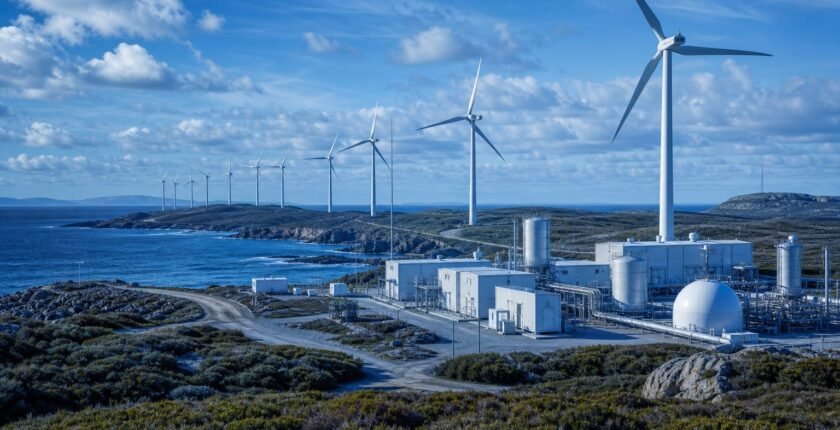
Estimated reading time: 5 minutes · Last updated:
Ballard Power Systems has paid $372 million to acquire UK-based GeoPura, moving the company beyond fuel cell modules into hydrogen production, compressed distribution and Energy-as-a-Service. The transaction, which closed August 28, includes $112 million in cash plus 49.6 million new common shares and links up to $37 million in additional payments to future performance. GeoPura’s equipment and service model—its Hydrogen Power Unit platform and a compressed hydrogen distribution fleet—give Ballard recurring-revenue channels in temporary and off-grid power. The move was as first reported by Environment+Energy Leader.
Key takeaways
- Deal value: Ballard paid $372 million upfront for GeoPura, comprising $112 million in cash and 49.6 million new common shares.
- Contingent payments: The agreement includes up to $37 million in additional payments tied to GeoPura meeting specified financial targets.
- Ownership and leadership: Former GeoPura shareholders will hold about 14.1% of Ballard after the deal; Andrew Cunningham becomes Ballard president.
- Product capability: GeoPura’s HPU2 hydrogen power unit can provide 500 kW of power and is paired with on-site electrolysis and compressed hydrogen distribution.
Table of contents
- Key takeaways
- Why Ballard is moving downstream into hydrogen supply
- What GeoPura brings: units, electrolysis and a distribution fleet
- Deal structure, shareholder impact and governance changes
- Commercial opportunities and the economic headwinds for hydrogen
- Where the acquisition could help and where it could fail
- What to be careful about
- Frequently asked questions
Why Ballard is moving downstream into hydrogen supply
Ballard has long sold fuel cell engines and modules to integrators. The GeoPura buyout adds operational services and fuel supply that Ballard did not previously control, enabling the company to offer end-to-end hydrogen power solutions rather than just hardware. That shifts revenue potential from one-off equipment sales toward recurring streams from hydrogen supply, equipment operation and maintenance.
The acquisition directly addresses customer friction points Ballard highlighted: availability of fuel, logistics for compressed hydrogen, and the operational complexity of deploying fuel-cell generation in temporary or constrained-grid locations. Owning those capabilities lets Ballard bundle equipment and fuel under an Energy-as-a-Service model—customers access hydrogen-powered generation without investing in or managing the full infrastructure themselves.
The strategic logic is to reduce the number of suppliers a customer must coordinate with and to capture additional margins along the value chain. That said, the company’s exposure to hydrogen production economics and distribution costs increases as Ballard assumes responsibility for pieces of the system it previously left to partners.
What GeoPura brings: units, electrolysis and a distribution fleet
Founded in 2019, GeoPura provides temporary and off-grid hydrogen power for sectors including construction, healthcare, events and film production. GeoPura's Hydrogen Power Units convert hydrogen into electricity without combustion using Ballard fuel cell modules, and the company runs onsite electrolysis facilities as well as a compressed-hydrogen distribution fleet in the UK.
The company's HPU2 system is explicitly cited as capable of delivering 500 kW of power. Combining those assets with Ballard’s existing fuel cell technology gives the buyer not just technology but deployed systems and operational experience in real-world, temporary-power markets.
That operational footprint can produce customer-usage data and service routines that Ballard previously struggled to access when its modules were sold through third-party integrators. Such data can inform product development, pricing and deployment strategies for future projects.
Deal structure, shareholder impact and governance changes
The $372 million upfront consideration comprises $112 million in cash and 49.6 million newly issued Ballard common shares, with restricted share units expected to result in approximately another 1.1 million shares after 12 months. Former GeoPura shareholders will hold about 14.1% of Ballard following completion.
The agreement links up to $37 million in additional payments to specified financial targets, tying part of the acquisition cost to future performance. That mechanism shares both upside and downside between Ballard and GeoPura’s previous owners and keeps some consideration contingent on execution.
Leadership changes accompany the deal: Andrew Cunningham, GeoPura’s former CEO, becomes Ballard president and joins the board, and Lord Richard Harrington also joins Ballard’s board. Cunningham will work alongside Ballard CEO Marty Neese, aligning operational leadership with board-level oversight.
Commercial opportunities and the economic headwinds for hydrogen
Bringing production, distribution and services under one corporate roof can simplify deployment for customers that currently depend on diesel generators or face grid-connection delays. Ballard sees scope to expand GeoPura’s operating model beyond Europe, including potential moves into North America.
But vertical integration does not erase the underlying cost pressures that affect hydrogen projects: green hydrogen production cost, transportation and limited fueling infrastructure remain material constraints. The company still faces competitive pressure from diesel in temporary-power markets and from batteries and other low-emission solutions where direct electrification becomes more viable.
Ultimately, the acquisition increases Ballard’s exposure to market and operational variables outside fuel cell performance, replacing some product risk with broader project and commodity risk tied to hydrogen supply economics and customer demand.
| Entity | Core offer before transaction | Capabilities added via GeoPura |
|---|---|---|
| Ballard (pre-acquisition) | Fuel cell engines and modules | — |
| GeoPura | Hydrogen Power Unit platform and Energy-as-a-Service | On-site electrolysis, compressed hydrogen distribution, HPU2 (500 kW) |
| Ballard (post-acquisition) | Fuel cell technology plus broader services | Hydrogen production, compressed distribution, Energy-as-a-Service model |
Where the acquisition could help and where it could fail
The case for
- Vertical integration may reduce coordination costs for customers and allow Ballard to capture recurring revenue from hydrogen supply and services.
- Operational data from GeoPura’s deployments could accelerate product improvements and inform pricing and service offerings.
- GeoPura’s fleet and model provide a platform Ballard can scale geographically, including potential expansion into North America.
The case against
- Hydrogen production and transport costs could keep the bundled service economically uncompetitive against diesel in many temporary-power use cases.
- Scaling compressed hydrogen distribution requires capital and logistics; failures or delays in building networks would limit commercial uptake.
- The earnout structure links part of the purchase price to future performance, exposing Ballard to downside if targets are missed.
What to be careful about
- Exposure to hydrogen price and transport-cost volatility as Ballard takes on production and distribution roles.
- Integration risk from combining a services-led business with Ballard’s existing product-focused operations.
- Potential dilution and shareholder reaction from issuing 49.6 million new shares plus roughly 1.1 million restricted shares after 12 months.
- Reliance on GeoPura meeting unspecified financial targets for up to $37 million in contingent payments.
The bottom line
The GeoPura acquisition repositions Ballard from a fuel-cell component supplier toward an integrated hydrogen services provider, trading some product-focused exposure for recurring revenue opportunities tied to fuel supply and operations. The $372 million deal—$112 million cash, 49.6 million new shares and up to $37 million in contingent payments—brings deployed units, electrolysis capacity and a distribution fleet into Ballard’s balance sheet. Success depends on whether Ballard can scale those operations and manage hydrogen production and logistics costs while converting deployments into repeatable commercial contracts.
What to watch
- Watch for the issuance of restricted share units expected to convert to roughly 1.1 million shares about 12 months after the August 28, 2026 closing; this date is derived from the deal terms and falls around 28 August 2027.
- Watch for Ballard announcements about rolling GeoPura’s Energy-as-a-Service model into North America; no date has been set for such expansion.
Frequently asked questions
How much did Ballard pay for GeoPura?
Ballard paid $372 million upfront for GeoPura, including $112 million in cash and 49.6 million new common shares, with up to $37 million more payable if GeoPura meets specified financial targets.
What capabilities does GeoPura add to Ballard?
GeoPura brings its Hydrogen Power Unit platform, on-site electrolysis for green hydrogen production and a compressed hydrogen distribution fleet; its HPU2 unit is cited as capable of providing 500 kW of power.
Who from GeoPura joins Ballard’s leadership?
Andrew Cunningham, GeoPura’s former CEO, becomes president of Ballard and joins the board, and Lord Richard Harrington also joins Ballard’s board alongside CEO Marty Neese.
Related reading
This article is information, not financial advice. Anyone acting on it should do their own checks.