
Blog
Bentley Torcal Aims to Rescue Luxury EV Sales
Estimated reading time: 5 minutes · Last updated:
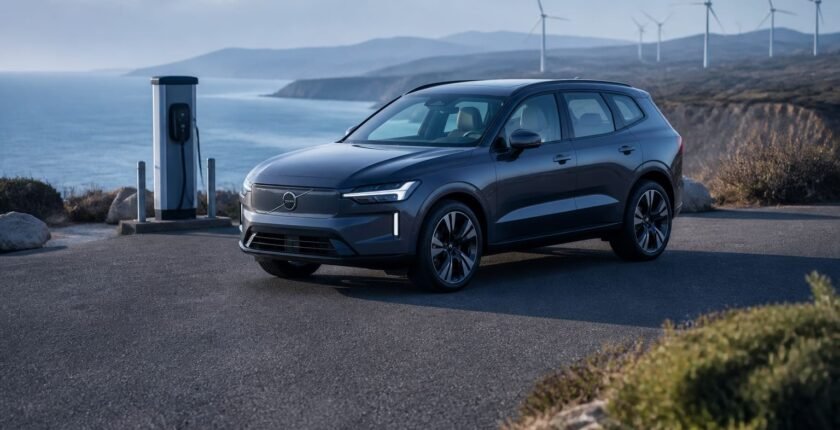
Bentley has unveiled the Torcal, its first fully electric model and a straight bid for wealthy SUV buyers. The Torcal offers up to 375 miles (WLTP) range (possibly about 330 miles on EPA), 10–80% charging in 16 minutes at 400 kW, and two high-performance variants that peak at 888 PS and 1,350 Nm. As first reported by WIRED, Jeremy White attended an early demo and described how Bentley pairs those figures with traditional craftsmanship, bespoke materials and new audio-visual effects to preserve the brand’s identity while going electric. The launch arrives into a weak luxury EV market, and Bentley is pricing the Torcal from $218,000 for the base model and $258,200 for the First Edition S.
Key takeaways
- Range and charging: Bentley says the Torcal delivers up to 375 miles WLTP and can charge 10–80% in 16 minutes at 400 kW.
- Performance: Sporting S models produce 888 PS and 1,350 Nm for a 0–60 mph time as quick as 2.9 seconds; the core model is 821 PS and 1,194 Nm.
- Price positioning: Bentley lists the Torcal from $218,000 for the base model and $258,200 for the First Edition S, aiming at buyers considering Range Rover Electric alternatives.
- Craftsmanship and tech: Bentley used Fox Brothers wool for panels, a 1,000-layer recycled walnut veneer, and an optional 1,780-watt Naim audio system with 28 speakers.
Table of contents
Specs that read like a performance brief
The Torcal is Bentley’s claim that electrification need not mean compromise on performance. Bentley quotes up to 375 miles (WLTP) of range and suggests roughly 330 miles on EPA testing, pairs twin electric motors for all-wheel drive, and specified that a 400 kW charger will take the battery from 10% to 80% in 16 minutes. The sporting S models are rated at 888 PS and 1,350 Nm of torque, numbers Bentley says allow a 0–60 mph sprint in about 2.9 seconds; the core model is listed at 821 PS and 1,194 Nm with a 0–60 mph time of 3.4 seconds.
Those headline figures matter because Bentley is pitching the Torcal not just as a rich-person commuter but as a demonstrably fast, long-range luxury SUV. The company has also engineered the roofline and aero to improve efficiency compared with its larger Bentayga stablemate, trimming overall length to 4,983 mm and keeping the vehicle to 2,016 mm in width. Bentley stresses that the vehicle remains five-seat and road-focused, even while competitors emphasize off-road capability.
Pricing, rivals and the market problem Bentley faces
Bentley has set a premium price: $218,000 for the base Torcal and $258,200 for the First Edition S. The brand compares the car directly with Jaguar Land Rover’s Range Rover Electric, which WIRED noted starts at about $138,000 in the US and has an Autobiography version around $208,000. Bentley positions the Torcal as an upmarket alternative — 'spend an extra $10,000' to move buyers from a Range Rover Autobiography to an electric Bentley is the explicit pitch in the launch coverage.
That strategy arrives against recent weakness in the high-end EV segment. WIRED reported Lamborghini shelved its Lanzador electric GT after demand fell dramatically, and that Mercedes-Benz sold only 1,450 examples of its electric G model in Europe through April 2025. Rolls-Royce Spectre sales were reported as down nearly by half. Those figures underline the risk Bentley faces: it can offer heritage and hand-crafted materials, but the pool of buyers willing to pay at this scale for an EV remains constrained.
Craft, cabin tech and a defence against low-cost rivals
Bentley’s defence against value-focused competitors is heritage-driven detail and distinctive sensory touches. The Torcal uses wool sourced and engineered by Fox Brothers to panel parts of the interior, a new veneer formed from 1,000 layers of walnut off-cuts and recycled paper sliced thinner than a millimetre, and an optional Naim sound system delivering 1,780 watts across 28 speakers including tactile seat shakers. Bentley also created filmed crystal light animations for the instrument cluster and a bespoke soundscape recorded from live instruments to reproduce a Bentley-like aural identity.
Still, Chinese marques are encroaching on the luxury SUV space with feature-heavy, lower-priced models. WIRED pointed to Xiaomi’s SkyNomad as an example of a rival that offers long range and unconventional interiors at much lower price points. Bentley’s bet is that provenance, tactile materials and bespoke sensory design remain something competitors cannot replicate quickly; whether that will be enough to sustain volume in a weak luxury EV market is the open question.
| Model | Range (WLTP / EPA) | US price (base) | Notable dimensions / notes |
|---|---|---|---|
| Bentley Torcal | up to 375 miles / maybe 330 miles | $218,000 (base); $258,200 (First Edition S) | 4,983 mm long; 2,016 mm wide; lower roofline than Bentayga |
| Range Rover Electric | similar range (WIRED: comparable) | $138,000 (starts in US); $208,000 (Autobiography) | About 20 cm taller than the Torcal; stronger off-road pedigree |
How the Torcal could win — and where it could falter
The case for
- Strong technical package: up to 375 miles WLTP range and 400 kW charging reduce practical EV objections for luxury buyers.
- Brand differentiation: Bentley is emphasising handcrafted materials, unique audio-visual effects and bespoke sound design that are harder for low-cost entrants to copy quickly.
The case against
- Weak luxury EV demand: WIRED notes Lamborghini shelved an EV program and Mercedes-Benz sold only 1,450 electric G Wagen in Europe through April 2025, constraining potential buyers.
- Price sensitivity and competition from China: feature-rich, lower-priced SUVs such as Xiaomi’s SkyNomad threaten to undercut established marques on value and tech.
What to be careful about
- Luxury EV buyers may prefer SUVs with stronger off-road credentials than the Torcal, given Range Rover’s established reputation.
- Macro and OEM cost pressures — Volkswagen Group announced a 50,000-job reduction — could force Bentley to limit investment or raise prices.
- A small addressable market for ultra-premium EVs raises the chance the Torcal will struggle to meet sales expectations in a weak segment.
The bottom line
The Torcal is Bentley’s attempt to translate heritage into an electrified product that can compete on range, charging speed and sensory luxury. Its technical numbers — up to 375 miles WLTP, 400 kW charging and sub-3-second 0–60 mph in the sportiest trim — give it the credentials to court demanding buyers. But Bentley is launching into a constrained luxury EV market: recent reporting shows several high-end models underperforming, and aggressive, lower-cost Chinese entrants are pressuring value expectations. Success for the Torcal will depend on whether heritage-driven craftsmanship and bespoke sensory touches are enough to justify its premium prices to a limited pool of buyers.
What to watch
- Watch for Bentley to open orders and state deliveries for the Torcal; no date has been set.
- Watch for initial customer delivery numbers or quarterly sales disclosures from Bentley; no date has been set.
Frequently asked questions
How far can the Bentley Torcal go on a single charge?
Bentley quotes up to 375 miles on the WLTP cycle and suggests the figure may be roughly 330 miles on EPA testing.
How fast can the Torcal recharge?
Bentley specifies 10–80% charging in 16 minutes when using a 400 kW charger.
How does the Torcal compare on price to the Range Rover Electric?
Bentley lists the Torcal from $218,000 for the base model and $258,200 for the First Edition S; WIRED reported the Range Rover Electric starts around $138,000 in the US with an Autobiography version at about $208,000.
Related reading