
Blog
49.9MW Flaxlands solar farm approved near M4
Estimated reading time: 3 minutes · Last updated:
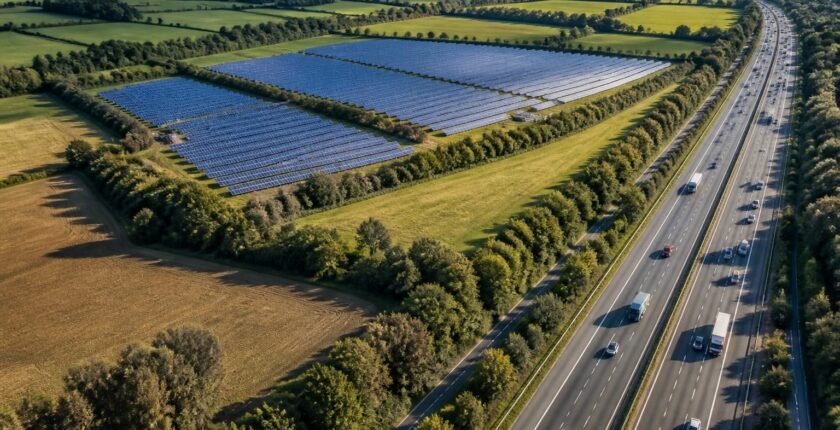
Wiltshire Council has granted planning permission for the Flaxlands solar farm at Flaxlands Farm between Royal Wootton Bassett and Hook, approving a 49.9-megawatt installation across 87 hectares that will operate for up to 40 years. The scheme includes a large battery energy storage system and new habitat creation areas. Planning officers judged the project's contribution to renewable generation, energy security and carbon reduction to outweigh concerns about visual impact and the temporary loss of farmland.
There are much more viable ways to install such solar farms – unused industrial estates, office/warehouse buildings and other brownfield sites.
Joann Sprules, Greenhill resident
Key takeaways
- Permission granted: Wiltshire Council granted planning permission for Flaxlands Solar Farm at Flaxlands Farm between Royal Wootton Bassett and Hook.
- Scale and life: The development is a 49.9-megawatt solar farm on 87 hectares that will operate for up to 40 years.
- Storage and ecology: Plans include a large battery energy storage system and habitat creation with buffers to protect ancient woodland and species highlighted by Natural England.
- Local reaction and construction: The application drew 29 objections and 25 letters of support, and planners required traffic controls to manage more than 1,000 vehicle movements during a six-month build period.
Table of contents
What planners approved and why
Wiltshire Council's planning officers approved the Flaxlands proposal on the grounds that it advances renewable energy, energy security and carbon reduction. The permission covers a 49.9-megawatt solar farm on 87 hectares, together with a large battery energy storage system and designated habitat creation areas. The decision formalises conditions that aim to protect sensitive features identified during consultation, and it sets the project's operating life at up to 40 years before site removal and restoration.
Local objections and ecological safeguards
The scheme attracted 29 formal objections and 25 letters of support. Lydiard Tregoze Parish Council objected on traffic and visual-amenity grounds, warning that the construction phase would put pressure on local roads. Natural England had flagged risk to the Flaxlands Manor County Wildlife Site in the original designs; the developer revised the layout to remove panels from the protected grassland and added ecological buffers for ancient woodland and species including bats, skylarks, great crested newts and water voles. Planners also required safeguards for the battery energy storage facility.
Construction, lifespan and road impacts
Construction is expected to involve more than 1,000 vehicle movements during a six-month build period, and planners imposed strict traffic controls to manage that phase. Once built, the array and the battery system will remain for up to 40 years, after which the panels will be removed and the site restored to agricultural use. Supporters say the project will help tackle climate change and boost local renewable capacity; opponents cite loss of countryside, visual impact and the burden of construction traffic on existing lanes.
How the decision could play out
The case for
- The permission secures 49.9MW of additional renewable capacity and a battery system that can support local energy security and grid balancing.
- Revised plans removed panels from the county wildlife site and added ecological buffers, reducing direct harm to ancient woodland and priority species.
The case against
- Local road capacity will be tested during the six-month construction window with more than 1,000 vehicle movements, raising disruption and safety risks.
- Visual impact and the temporary loss of 87 hectares of farmland leave long-term amenity and land-use questions that could prompt local challenges during implementation.
What to be careful about
- Traffic management may prove insufficient for the more than 1,000 vehicle movements during the six-month build, causing local disruption on narrow lanes.
- Battery energy storage requires strict safeguards; any failure in design or operation could prompt safety or planning enforcement action.
- Ecological mitigation depends on the revised layout and buffers; inadequate implementation could harm species and protected habitat initially identified by Natural England.
The bottom line
The Flaxlands decision formalises a 49.9MW solar installation intended to add local renewable capacity while imposing conditions aimed at protecting wildlife and managing construction impacts. The consent balances climate and energy aims against landscape and road concerns, but those trade-offs will be tested during the six-month build and across the project's 40-year life. Stakeholders and local residents will now look for published compliance reports and the detailed habitat-delivery plans that must follow to show the safeguards are effective.
What to watch
- Watch for the council's published monitoring and compliance reports on planning conditions; no date has been set.
- Watch for any planning enforcement or variation applications if traffic management or ecological measures change; no date has been set.
Frequently asked questions
How large is the Flaxlands solar farm?
The approved project is a 49.9-megawatt solar farm sited on 87 hectares at Flaxlands Farm near the M4 and is designed to operate for up to 40 years.
What species and habitats were protected in the revised plans?
The developer removed panels from the Flaxlands Manor County Wildlife Site and added ecological buffers to protect ancient woodland and species cited by Natural England, including bats, skylarks, great crested newts and water voles.
What will construction mean for local roads?
Planners required traffic controls because construction is expected to generate more than 1,000 vehicle movements during a six-month build period, according to the decision notice summarised in local reporting.
Related reading