
Blog
When will Generac unlock PWRcell solar batteries?
Estimated reading time: 5 minutes · Last updated:
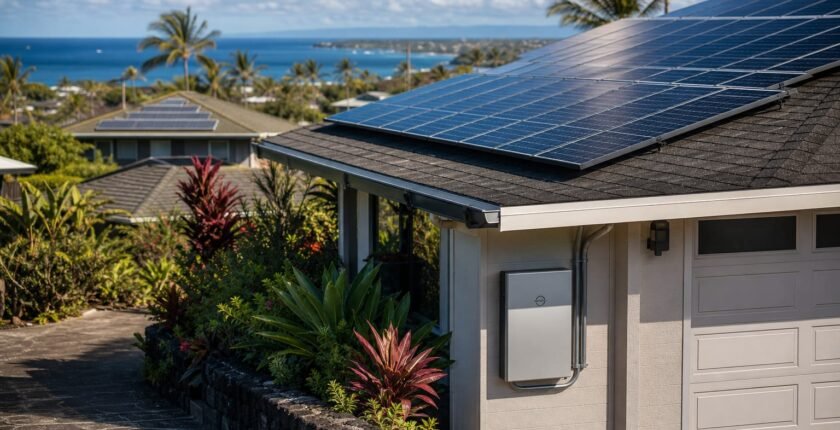
Generac has “temporarily disabled” a subset of first‑generation PWRcell batteries while it evaluates their performance, Anthony Jones, a Generac Power Systems Inc. spokesperson, told the Honolulu Star‑Advertiser. That description — and Jones’s statement that "we cannot share Hawaii- specific information, however, the disabled batteries affect a small percentage of our North America customers in total," — are the company’s only timeline signals: Generac would not say how many Hawaii households are affected or when locked systems will be returned to full backup function. Affected owners have posted on Nextdoor and Reddit that the lockout renders rooftop solar battery backups unable to store power, even as Hawaii faces an active hurricane season, as first reported by the Honolulu Star-Advertiser.
we cannot share Hawaii- specific information, however, the disabled batteries affect a small percentage of our North America customers in total,
Anthony Jones, Generac spokesperson
Key takeaways
- Company action: Generac says it “temporarily disabled” a subset of first‑generation PWRcell batteries while it evaluates performance, Anthony Jones said.
- Scope: Jones said the disabled batteries “affect a small percentage of our North America customers in total,” and he declined to provide Hawaii‑specific counts.
- Customer impact: Owners on Nextdoor and Reddit report the lockout stops their rooftop systems from storing power for outages or rainy days, removing backup capability.
- Grid and liability: Hawaiian Electric spokesperson Darren Pai said the company was not aware of the action and that residential battery systems remain homeowner property.
Table of contents
What Generac says and what it has not disclosed
Generac told customers and the Honolulu Star‑Advertiser that it has “temporarily disabled” some first‑generation PWRcell batteries to evaluate performance. Anthony Jones, a spokesperson for Generac Power Systems Inc., emailed that the company notified affected customers and that solar panels and production were not affected. Jones declined to say how many Hawaii customers were affected or to give a restoration date, and he added that the company is committed to completing its evaluation “as quickly and thoroughly as possible.” That language is the company’s public timetable; no scheduled reactivation date appears in the statements provided.
How owners and the grid are affected during hurricane season
Owners who reported the lockout on Nextdoor and Reddit say it removes the battery backup that otherwise stores rooftop solar output for outages and cloudy days. That loss matters in Hawaii during an active hurricane season because backup storage is the homeowner’s means to run critical loads when the grid is out. Hawaiian Electric did not identify any grid impact: Darren Pai, a Hawaiian Electric spokesperson, said the company was not aware that Generac had disabled customer battery storage and reiterated that a residential battery system is the homeowner’s property, and that homeowners should work with Generac or their solar company to resolve the issue.
Legal context, customer follow‑up and local details
Some customers asked whether the lockout is tied to the SnapRS class‑action, which alleged that SnapRS components may overheat, melt or fail. Generac denied the allegations and denied wrongdoing; both sides have agreed to a proposed settlement and the case materials are linked at generacsnapsettlement.com. The Honolulu Star‑Advertiser advised readers that Kokua Line can be reached by mail at 500 Ala Moana Blvd., Suite 2‑200, Honolulu, HI 96813; by phone at 808‑529‑4773; or by email at kokualine@staradvertiser.com. In a separate Kokua Line item on parking, the Department of Health’s posted rate of $1.50 an hour ahead of a move was replaced on 1 September 2026 by a facility charge reported as $6 an hour; the Revised Ordinances of Honolulu, ROH Section 15‑23.2A, caps some attendant rates at $3 per hour for the first two hours and $4.50 per hour thereafter, and an attendant described the facility as charging $3 per half‑hour (or $6 an hour) starting 1 September 2026.
How this could evolve
The case for
- Generac’s stated evaluation could be completed quickly and allow timed reactivation for customers; the company told customers it is committed to finishing the review "as quickly and thoroughly as possible."
- Hawaiian Electric says the grid is not affected, which limits broader service or safety interventions while the issue remains with equipment owned by homeowners.
The case against
- Lack of a timetable and a refusal to provide Hawaii‑specific affected counts prolongs customer uncertainty and leaves some homes without backup during hurricane season.
- The SnapRS class‑action and its proposed settlement keep a safety question in the background; although Generac denied liability, the litigation and its notices could delay an operational fix or wider customer notifications.
What to be careful about
- Customers may remain without battery backup during storms because Generac has not given a restoration date.
- If the SnapRS components implicated in the class‑action are related, safety concerns could restrict a software reactivation until hardware or component issues are fully assessed.
- Limited disclosure of affected counts increases the chance homeowners misjudge local outage risk.
- Owners who treat a disabled storage system as a grid issue may face service denials because utilities like Hawaiian Electric state residential batteries are homeowner property.
The bottom line
Generac’s public position is that a limited set of first‑generation PWRcell batteries were temporarily disabled while the company evaluates performance, but it has given no reactivation date and declined to provide Hawaii‑specific affected counts. Owners report on Nextdoor and Reddit that disabled systems no longer store rooftop solar output for outages, and Hawaiian Electric says the action did not affect the grid. For now, homeowners should expect to work with Generac or their solar installer; follow any customer bulletins from Generac and the settlement materials at generacsnapsettlement.com for developments.
What to watch
- Watch for a Generac customer bulletin or email that gives a concrete reactivation date for affected PWRcell units; no date has been set.
- Watch for updates or filings at generacsnapsettlement.com about the proposed SnapRS settlement; no date has been set.
- Watch for the Department of Health move downtown on 21 September 2026 and any public notices about Alii Place parking rates that may reference the change.
Frequently asked questions
Who disabled the batteries and why?
Generac Power Systems Inc. says it “temporarily disabled” a subset of first‑generation PWRcell batteries while it evaluates their performance; Anthony Jones provided that explanation by email.
Is the Hawaii grid affected?
Hawaiian Electric spokesperson Darren Pai said the company was not aware of Generac disabling battery storage and that residential battery systems are the homeowner’s property.
Is the lockout related to the SnapRS lawsuit?
Customers have asked that question; the page notes a class‑action over SnapRS components that alleged overheating and says Generac denied the allegations and a proposed settlement is available at generacsnapsettlement.com.
Related reading