
Blog
World Bank Flags Weak Progress on KP Hydropower Project
Estimated reading time: 4 minutes · Last updated:
The World Bank has rated progress toward the objectives of its $727 million hydropower and renewable energy financing for Khyber Pakhtunkhwa as moderately unsatisfactory. It rated day-to-day implementation one notch higher, at moderately satisfactory. The gap comes down to money reaching the ground. Only $3.95m has been paid out from a $200m market-based loan, and $34m from a $240m concessional loan. Approved in 2020, the KP hydropower project has a closing date of 30 November 2027. The government has asked the bank to restructure it so that scope and funding fit the priorities now driving the work.
Key takeaways
- Split verdict: The World Bank rated the KP hydropower project moderately unsatisfactory on progress toward its goals and moderately satisfactory on implementation.
- Slow drawdown: Only $3.95m of a $200m market-based loan and $34m of a $240m concessional loan had been disbursed.
- Restructuring sought: The government asked the World Bank to restructure the $727 million project, which is due to close on 30 November 2027.
- Three components: The programme covers the 88-megawatt Gabral-Kalam scheme, the planned 157MW Madyan project and solar units tied to hydropower assets.
Table of contents
Why the World Bank Split Its Verdict on KP Hydropower
The bank issued two grades here, and they point in different directions. Implementation, meaning how the work is being managed, earned moderately satisfactory. Progress toward what the Khyber Pakhtunkhwa Hydropower and Renewable Energy Development scheme was funded to achieve earned moderately unsatisfactory.
Disbursement explains much of that gap. The $3.95m drawn from the $200m market-based loan is roughly 2 percent of it. The concessional side has moved faster, with $34m of $240m released, about 14 percent. The two loans total $440m, and about $38m of that, under 9 percent, had reached the project.
The bank also classed the $727 million financing as carrying substantial risk, as first reported by Dawn. With the 30 November 2027 end date fixed, the pace of drawdown is the figure that matters most.
What the Restructuring Request Puts on the Table
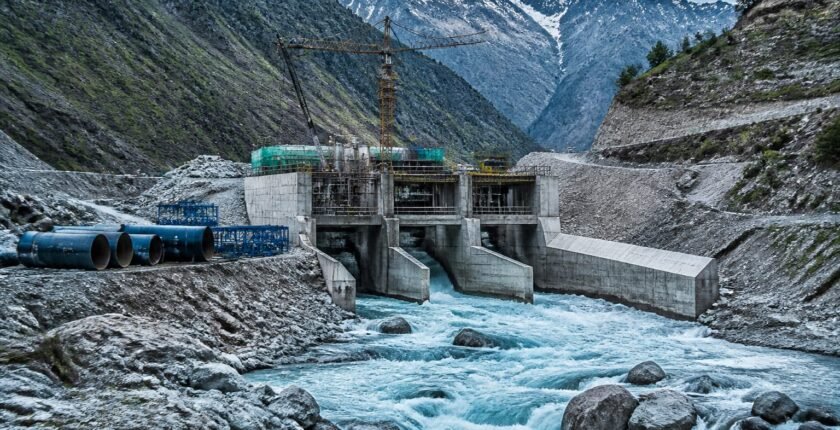
Three assets sit inside the programme. The 88-megawatt Gabral-Kalam hydropower scheme is where the bank's assessment shows work moving forward.
The 157MW Madyan project is still described as planned, as are solar installations linked to hydropower assets. Madyan alone would carry close to twice the capacity of Gabral-Kalam, so its fate shapes how much the programme ultimately delivers.
The government's request would realign what the project builds and how it is paid for with the priorities guiding implementation. The bank has not said which components could change. Whether Madyan and the solar work survive in their current form is an open question.
| Loan | Size | Disbursed | Approx. share disbursed |
|---|---|---|---|
| Market-based | $200m | $3.95m | about 2% |
| Concessional | $240m | $34m | about 14% |
| Both loans | about $440m | about $38m | under 9% |
What could speed up or stall the project
The case for
- Gabral-Kalam is the component with visible progress, giving a restructured project a working anchor.
- Concessional disbursement at about 14 percent is running well ahead of the market-based loan.
- Implementation itself is rated moderately satisfactory, so the bank is not faulting project management.
The case against
- Under 9 percent of the two loans has been disbursed with a 30 November 2027 closing date.
- The bank classes the $727 million financing as carrying substantial risk.
- Madyan and the solar installations remain planned, and a restructuring could trim them.
What to be careful about
- A restructuring could cut the 157MW Madyan project or the hydropower-linked solar work to fit the remaining time and money.
- Slow drawdown of the $200m market-based loan may leave much of it unused by the November 2027 close.
- The substantial-risk classification on the $727 million financing signals the bank's concern about delivery.
The bottom line
The two ratings tell a consistent story. The bank sees a project being run competently but not delivering at the pace its 2020 approval assumed, with Gabral-Kalam carrying most of the visible progress and the larger Madyan plant still on paper. A restructuring is meant to close that kind of gap, and its terms will matter more than the rating itself. If scope shrinks, Madyan and the solar components are the obvious candidates for trimming. If funding is redirected toward work that is ready, disbursement could pick up before 30 November 2027. Neither outcome has been announced, and the bank has given no timetable.
What to watch
- Watch for the World Bank's decision on the government's restructuring request; no date has been set.
- The project's closing date of 30 November 2027 is the deadline against which remaining disbursement will be measured.
- Watch whether the 157MW Madyan project keeps its place in any revised scope; no timeline has been announced.
Frequently asked questions
How much of the World Bank's KP hydropower money has been spent?
Of the $200m market-based loan, $3.95m has been disbursed, and $34m of the $240m concessional loan. Together that is about $38m of roughly $440m across the two loans.
When does the KP hydropower project end?
Approval for the project came in 2020, and its closing date is set for 30 November 2027. Before that date arrives, a restructuring requested by the government could alter both its scope and its funding.
Which power plants are part of the Khyber Pakhtunkhwa project?
The programme includes the 88-megawatt Gabral-Kalam hydropower scheme and the planned 157MW Madyan project. It also covers solar installations linked to hydropower assets.
Related reading