
Blog
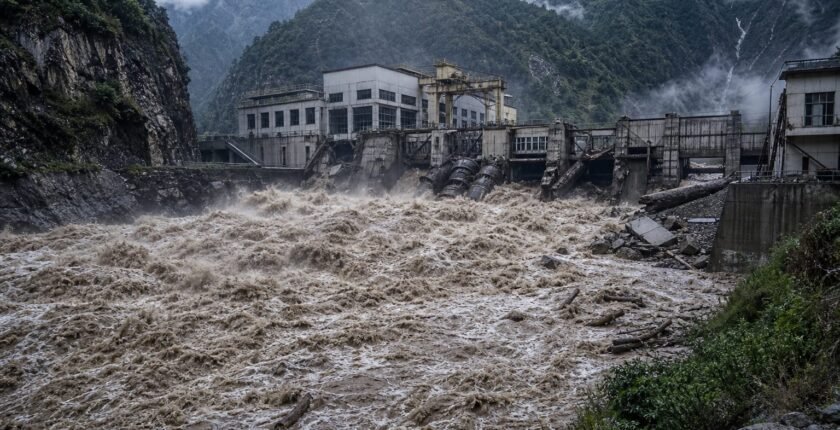
Flash Floods Gut Nepal’s Upper Trishuli-1 Hydropower Site
Estimated reading time: 5 minutes · Last updated:
A large flash flood struck the Upper Trishuli-1 (UT-1) hydropower project on 26 August 2026, destroying most construction works at the 216MW site and interrupting a development led by Korea South-East Power (KOEN). The flood, believed to have been triggered when part of a glacier collapsed into the valley, hit after years of construction and a previous glacial flood in July 2025. Project sponsors report around an 84% construction progress rate at the time; emergency teams from KOEN and Doosan Enerbility were dispatched the next day, and Doosan pledged $5 million in immediate aid to Nepal’s Rasuwa region. The site supplies no electricity yet; its planned annual output is 1.456 billion kWh.
The overall progress rate was around 84% at the time of the accident. We estimate that over 90% of the upper facilities were destroyed, and about 90% of the base camp where construction workers stayed was also lost.
Yoon Jang-hyun, head of KOEN’s New Growth Division
Key takeaways
- Scale: Upper Trishuli-1 is a 216MW hydropower plant designed to produce 1.456 billion kWh per year, about a 20% lift to Nepal’s generation capacity.
- Damage: KOEN estimated the site was about 84% complete when the flood hit and that over 90% of upper facilities and about 90% of the base camp were destroyed.
- Cost and ownership: The project’s reported cost is about 712 billion Korean won and KOEN leads development through the local project company NWEDC with a 50% stake.
- Finance and support: The lender group was arranged by the International Finance Corporation and includes nine institutions, among them the Export-Import Bank of Korea, ADB and AIIB.
Table of contents
- Key takeaways
- What happened at Upper Trishuli-1 and the immediate response
- Project design, financing and contractual terms at risk
- Regional portfolio implications and the case for reassessment
- Rebuild scenarios: mechanics for recovery and what could halt progress
- What to be careful about
- Frequently asked questions
What happened at Upper Trishuli-1 and the immediate response
On 26 August 2026 a sudden surge of water and debris from a valley-side glacier collapse swept through the Upper Trishuli-1 construction area. The event followed a smaller glacial release in July 2025 that had already damaged works; this latest collapse carried rock and ice into access roads, tunnels and the plant footprint, leaving the main construction site heavily damaged.
KOEN and contractor Doosan Enerbility sent emergency response teams to the site on 27 August, and Doosan announced $5 million in emergency aid for the Rasuwa region. KOEN’s New Growth Division head Yoon Jang-hyun briefed departing teams that the project was roughly 84% complete when the flood struck and that the firm estimates more than 90% of upper facilities and about 90% of the base camp were lost.
Local rescue and site-stabilisation tasks are under way, but engineers now face both immediate recovery — debris clearance, worker welfare and temporary shelters — and longer assessments to judge whether tunnelling, intake structures and roadwork remain safe for rebuilding.
Project design, financing and contractual terms at risk
UT-1 is being developed by Korea South-East Power with Doosan Enerbility as the main contractor through a local special-purpose company NWEDC; KOEN holds a 50% share. The scheme is quoted as a 216MW plant with an expected annual generation of 1.456 billion kWh, and contractual arrangements foresee selling power to the Nepal Electricity Authority under a 30-year offtake.
The project’s construction cost is reported at about 712 billion Korean won. A lender group was arranged by the International Finance Corporation under the World Bank umbrella and comprises nine financial institutions, including the Export-Import Bank of Korea, the Asian Development Bank and the Asian Infrastructure Investment Bank. During financing reviews the plant’s main facilities were designed to withstand a so-called once-in-10,000-years flood, a standard lenders described as highly conservative.
That design standard did not, however, prevent vulnerability to glacier-related processes now emerging at the site. Lenders and sponsors face decisions about reconstruction scope, insurance claims, and whether technical designs must change to address ongoing glacier collapse and valley instability.
Regional portfolio implications and the case for reassessment
KOEN has expanded into South Asian mountain hydropower for years. The company operates the 102MW Gulphur plant in Pakistan since 2020 and is developing two further Pakistan projects: Asrit-Kedam at 229MW and Kalam-Asrit at 238MW, with target commercial operation in 2029 and 2030 respectively. Together with UT-1, the four projects are reported to represent about 2.36 trillion Korean won of investment.
The UT-1 flood has prompted calls for a comprehensive reassessment of project sites across the portfolio, focusing on glacial hazard mapping, slope stability and emergency access. Seoul National University of Science and Technology Professor Yoo Seung-hoon warned that reconstruction will be delayed and that government-level support may be required to avoid project downsizing.
For sponsors, the immediate questions are whether existing flood and glacier risk studies remain adequate and how to rework civil designs, procurement and insurance to reflect what project engineers now characterise as an unforeseen glacial hazard.
| Project | Capacity (MW) | Status | Target COD | Investment (reported) |
|---|---|---|---|---|
| Upper Trishuli-1 (UT-1) | 216 | Under construction; heavily damaged | next year | 712 billion KRW |
| Gulphur | 102 | Operational | since 2020 | |
| Asrit-Kedam | 229 | In development | 2029 | |
| Kalam-Asrit | 238 | In development | 2030 |
Rebuild scenarios: mechanics for recovery and what could halt progress
The case for
- Sponsors and contractor teams are already mobilised; immediate emergency aid and dispatched personnel could allow phased repairs and a restart of critical civil works.
- Existing financing structures involve multilateral lenders and IFC arrangement, which can provide structured loss-sharing and technical assistance for redesign and resiliency upgrades.
The case against
- If geotechnical surveys show widespread valley instability, reconstruction scopes and costs will rise and the commercial operation timetable will slip beyond the planned next-year target.
- Insurance and lender negotiations could delay payments or require additional covenants, increasing sponsor equity needs and creating a risk of project downsizing or stalled works.
What to be careful about
- Ongoing glacier collapse or new mass-wasting events along the valley that damage rebuilt civil works.
- Escalation of reconstruction costs beyond the reported 712 billion KRW budget and potential coverage gaps in project insurance.
- Delays or additional conditions from the nine-member lender group that could force renegotiation of financing terms or sponsor equity contributions.
The bottom line
The UT-1 flash flood underlines a growing operational hazard for mountain hydropower: glacier-related failures that prior assessments treated as low probability. For KOEN and its lenders the immediate task is damage assessment and recovery; the wider challenge is whether design standards, insurance and lender covenants will be revised to factor persistent glacial instability. The scale of reported loss — with the site about 84% complete and upper facilities largely destroyed — means reconstruction will test budgets, timetables and the appetite of multilateral financiers to underwrite higher resilience costs.
What to watch
- monitor reconstruction and safety findings from the site reassessment; no date has been set for a public report
- track Asrit-Kedam’s planned commercial operation in 2029 and whether sponsors change design practices after UT-1
- watch Kalam-Asrit’s 2030 target commercial operation for signs the portfolio-wide timetable is being revised
Frequently asked questions
What triggered the flood at Upper Trishuli-1?
Reports indicate the flash flood was caused when part of a glacier collapsed into the valley, carrying rocks and water into the construction area; a previous glacial lake release in July 2025 had already damaged works.
How large is UT-1 and what was it expected to deliver?
Upper Trishuli-1 is a 216MW plant planned to generate about 1.456 billion kWh per year, a volume the Energy Ministry says would raise Nepal's total generation by roughly 20%.
Who financed and owned the project?
The project cost is reported at about 712 billion Korean won; development is led by Korea South-East Power through NWEDC with a 50% stake, and an IFC-arranged lender group of nine institutions including the Export-Import Bank of Korea, ADB and AIIB provided financing.
Related reading