
Blog
Sandoval County Weighs $510M Bonds for Battery Storage
Estimated reading time: 5 minutes · Last updated:
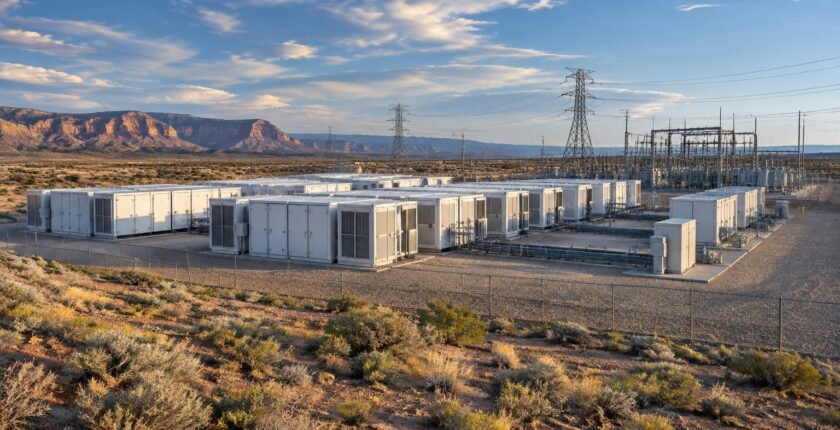
Sandoval County commissioners vote on Wednesday, 18 November 2026, on whether to back two battery storage projects on Rio Rancho Estates land with up to $510 million in industrial revenue bonds. Under the deal, TAG II Storage LLC and Encino Storage LLC would not pay property taxes. Instead, roughly $14.1 million would flow to the county and local schools across 23 years. Industrial revenue bonds are a financing tool in which a county takes legal title to a private project, which removes it from the tax rolls. The Sandoval County battery storage deals swap a property tax bill for a fixed payment schedule, and the terms are not yet final.
Key takeaways
- Bond caps: Sandoval County would issue up to $230 million in industrial revenue bonds for TAG II Storage LLC and up to $280 million for Encino Storage LLC.
- Payments instead of taxes: The two storage developers would pay about $14.1 million from 2027 through 2049, with about $5.9 million going to schools.
- Terms can change: The draft payment schedules are marked temporary in the county agenda packet and may be revised before the bonds close.
- Land swap: Under two resolutions, the land for the battery projects would be removed from data center bond projects already in place on Rio Rancho Estates land.
- Same agenda: County Manager Wayne Johnson's pay could rise from $180,000 to $215,000 by 1 July 2027 through a consent-agenda vote.
Table of contents
How the $510 Million Bond Structure Works
Two ordinances are on the agenda. The county agenda packet caps the bonds at $230 million for TAG II Storage LLC and $280 million for Encino Storage LLC. Together they reach the $510 million ceiling that commissioners will consider.
The bonds work by shifting ownership. Sandoval County would hold title to each storage project while the companies operate it, so neither site counts as taxable property. In place of a tax bill, each developer makes payments in lieu of taxes, a set stream of cash that stands in for what the property tax would otherwise raise.
That makes the vote less about spending than about tax policy. The question for commissioners is whether a fixed payment schedule is a fair exchange for property that would otherwise sit on the rolls for decades. The answer depends on numbers that, as the next section shows, are still moving.
Where the $14.1 Million Would Go, and Why It Could Change
Draft schedules in the agenda packet run the payments from 2027 to 2049. Of the roughly $14.1 million total, about $5.9 million is set aside for schools. That leaves about $8.2 million for the county over the same stretch.
Those figures are not locked. The packet labels the schedules temporary and says they may shift before the bonds close. The amounts in front of commissioners on 18 November may therefore differ from what the two companies end up paying.
A separate pair of resolutions deals with the land itself. They would remove the storage sites from bond projects already set up for data centers, freeing those parcels for batteries. The packet, as described, does not spell out how much land moves or what that means for the data center projects that give it up.
A Manager Raise and $34.4 Million in Voter Bonds Share the Agenda
The same meeting carries a pay increase for County Manager Wayne Johnson. It sits on the consent agenda, where items pass together in one vote unless a commissioner asks to discuss one separately. His salary would go from $180,000 to $200,000 at once, then to $215,000 on 1 July 2027. That is up to $35,000 more a year, a 19.4% rise.
County staff point out that his salary has not moved since July 2024. They also point to a survey from March 2026 ranking Sandoval last on manager pay among New Mexico's five Class A counties, where the average is $213,417.
Commissioners will also take a first step on the $34.4 million in general obligation bonds voters backed on 3 November. The package holds $22 million to build offices and a warehouse for the Bureau of Elections, $9 million for a fire training facility and academy, and $3.4 million for library upgrades, books and equipment.
| Item | Type | Amount | Purpose |
|---|---|---|---|
| TAG II Storage LLC | Industrial revenue bonds | Up to $230 million | Battery storage, Rio Rancho Estates |
| Encino Storage LLC | Industrial revenue bonds | Up to $280 million | Battery storage, Rio Rancho Estates |
| Bureau of Elections | General obligation bonds | $22 million | Warehouse and offices |
| Fire academy | General obligation bonds | $9 million | Training facility |
| Libraries | General obligation bonds | $3.4 million | Books, equipment, upgrades |
The case for and against the storage bonds
The case for
- The county and schools would receive a defined stream of about $14.1 million from 2027 through 2049.
- About $5.9 million of that is earmarked for schools.
- The land carve-out lets battery projects use parcels already tied to data center bond projects rather than new sites.
The case against
- The payment schedules are temporary and could fall before closing.
- Placing the projects under county title keeps up to $510 million in project value off the property tax rolls for the bond term.
- The packet does not detail how removing land affects the existing data center bond projects.
What to be careful about
- Final payment-in-lieu-of-taxes amounts could be lower than the draft $14.1 million once the bonds close.
- Carving the storage sites out of data center bond projects could alter the terms of those earlier deals.
- The manager's raise can pass without public debate because it sits on the consent agenda.
The bottom line
Two loans also sit on the agenda: $9.02 million to run the landfill, which landfill revenue would pay back, and $2.2 million for land purchases aimed at economic development. Commissioners will weigh an updated hazard mitigation plan as well, which the county needs in order to stay eligible for FEMA disaster mitigation funds. In its 23-item list for the 2027 legislative session, the county wants lawmakers to overhaul the Inspection of Public Records Act so that some law enforcement records are shielded and high-volume requests are handled on "realistic response timelines". The list also seeks to relieve county commissions of their duty to certify elections. For the storage projects, the real question is the final payment schedule, which can still change before closing.
What to watch
- The commission votes on the TAG II and Encino bond ordinances at 6 p.m. on Wednesday, 18 November 2026, in Commission Chambers at 1500 Idalia Road, Building D, Bernalillo.
- Commissioners meet again at 6 p.m. on 9 December 2026, when they take up a special improvement district ordinance.
- Watch for the final payment schedules at bond closing; no closing date has been set, and the first payments are due in 2027.
Frequently asked questions
What is a payment in lieu of taxes on a battery storage project?
It is cash a company pays a local government instead of property tax when the government holds title to the project. In Sandoval County, the two storage developers would pay about $14.1 million from 2027 through 2049.
How much would Rio Rancho area schools get from the storage projects?
Draft schedules set aside about $5.9 million for schools over the 2027 to 2049 period. The schedules are marked temporary, so that figure could change before the bonds close.
Who votes on the Sandoval County battery storage bonds?
The five commissioners: Katherine Bruch, Jon Herr, Michael Meek, Jordan Juarez and Josh Jones. They meet at 6 p.m. on 18 November 2026 in Bernalillo.
Can residents comment before the vote?
Yes. Sandoval County takes public comment in person at the 18 November meeting or online through the county commission website, and the meeting is streamed on sandovalcountynm.gov.
Related reading