
Blog
EDP completes 92MW/368MWh Sandrini battery in California
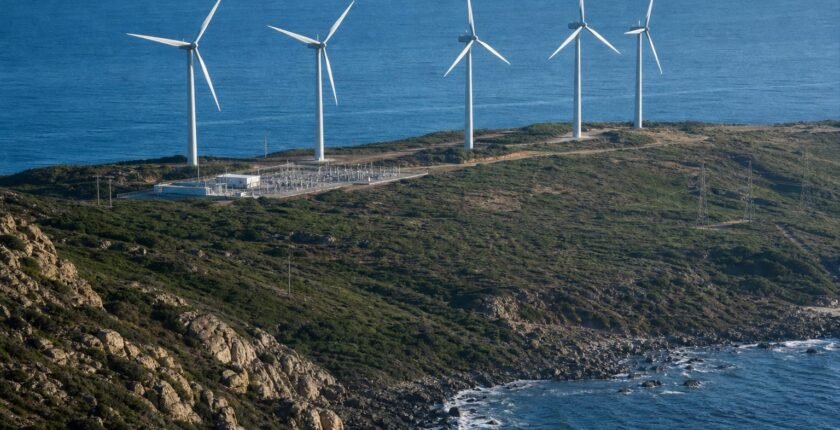
Estimated reading time: 3 minutes · Last updated: 2026-08-21
EDP and the Redwood Coast Energy Authority (RCEA) have finished the Sandrini Energy Storage installation in California: a 92 MW/368 MWh battery system that sits alongside the 300 MW Sandrini Solar park. RCEA has agreed to purchase 100 MW of generation from the co-located solar facility, and an energy storage service agreement covers 100% of the battery's capacity. EDPR says the battery can supply the equivalent of power to over 22,000 homes and that the combined solar and storage programme supported roughly 250 construction jobs.
Key takeaways
- Battery capacity: The Sandrini Energy Storage system is 92 MW and stores 368 MWh of energy.
- Solar pairing and offtake: The battery is co-located with a 300 MW Sandrini Solar park; RCEA will offtake 100 MW from that solar park.
- Local economic impact: EDPR projects the storage piece will generate over €4 million for local services and supported about 50 construction jobs.
- Total project impact: EDPR reports the combined Sandrini Solar & Energy Storage projects supported around 250 construction jobs and will produce more than €21 million in local tax revenue.
Table of contents
How Sandrini pairs solar with a grid-scale battery
The completed Sandrini Energy Storage installation pairs a 92 MW/368 MWh battery with the adjacent 300 MW Sandrini Solar park. The Redwood Coast Energy Authority (RCEA) has contracted to buy 100 MW from the solar park; an energy storage service agreement, signed to cover the battery's full capacity, assigns the battery’s output under that contract. The arrangement lets the solar output be shifted by the battery to when local demand is higher, converting daytime solar generation into dispatchable electricity.
Reported economic and employment effects
EDPR attributes direct local benefits to the installations. The company says the battery alone supported approximately 50 jobs during construction and that the broader Sandrini Solar & Energy Storage programme supported about 250 construction jobs in total. EDPR also projects the storage infrastructure will generate over €4 million for local services and that the combined projects will yield more than €21 million in local tax revenue.
What the operator says about grid value
EDP Renewables frames the battery as a resilience and reliability tool. The company highlights that storage turns variable renewable output into electricity that can be supplied around the clock, helping meet peak demand. That capability underpins the commercial case for pairing large solar arrays with sizeable batteries and for offtake agreements that lock in a portion of the solar output for local authority use.
| Asset | Nameplate | RCEA offtake / contract | EDPR economic figures |
|---|---|---|---|
| Battery | 92 MW / 368 MWh | Covered 100% by an energy storage service agreement | Over €4 million for local services (EDPR estimate); ~50 construction jobs (EDPR) |
| Solar park | 300 MW | RCEA purchases 100 MW | Part of combined project that supported ~250 construction jobs and >€21 million in tax revenue (EDPR) |
Near-term case for and against the project’s impact
The case for
- The battery lets solar output be time-shifted into evening peaks, improving local grid reliability and reducing reliance on fossil peakers.
- A long-term offtake from the co-located solar park gives RCEA a predictable supply slice and creates a steady local revenue stream if tax and operating assumptions hold.
The case against
- Projected local revenues and job counts are EDPR estimates and could be lower if tax assessments or operating arrangements change.
- The battery’s commercial value depends on dispatch rules and market prices for capacity and energy, which can vary by policy and season.
What to be careful about
- All monetary figures and job estimates are reported by EDPR and therefore reflect its projections.
- Local tax revenue depends on assessments and ongoing operation; one-off construction jobs do not guarantee permanent local employment.
- The battery’s revenue model relies on contracted offtake and market conditions that could shift with regulatory or market changes.
The bottom line
The Sandrini scheme ties a large battery to a major solar array and an explicit local offtake, a combination operators increasingly use to make renewables deliverable at peak times. All headline figures in this piece — the 92 MW/368 MWh battery, the 300 MW solar park, the 100 MW RCEA offtake and the job and revenue estimates — come from EDPR’s account of the project. The next steps for verification are the commercial operation date, contract terms and the basis for the household-equivalent and revenue calculations.
What to watch
- Watch for a public notice of the Sandrini Energy Storage commercial operation date; no date has been set in the available material.
- Watch for RCEA to record the start of its 100 MW offtake from the Sandrini Solar park; the material gives no start date.
Frequently asked questions
What are the technical specs of the Sandrini Energy Storage system?
The installation is a 92 MW battery with 368 MWh of storage capacity, co-located with a 300 MW Sandrini Solar park, according to EDPR.
Who contracted to receive power from the Sandrini projects?
The Redwood Coast Energy Authority (RCEA) will purchase 100 MW from the Sandrini Solar park, and an energy storage service agreement covers 100% of the battery’s capacity, per EDPR.
How many jobs and how much local revenue did the project report?
EDPR reports the Sandrini Solar & Energy Storage projects supported about 250 construction jobs in total, with roughly 50 jobs tied to the storage element, and that combined projects will generate more than €21 million in local tax revenue and over €4 million for local services.
Related reading