
Blog
Industrial policy for U.S. wind manufacturing
Estimated reading time: 5 minutes · Last updated: 2026-08-14
Heliene’s announcement of 93 layoffs at its Mountain Iron, Minnesota, plant crystallises a risk U.S. wind manufacturing faces: boom-and-bust investment driven by shifting incentives and trade moves. A consistent industrial policy for wind manufacturing would stabilise demand, align grid upgrades and link federal incentives to workforce training. The Biden administration’s Inflation Reduction Act and infrastructure spending are the most recent large-scale attempts to do that, while the 2025 policy turn toward tariffs and retreat on some incentives has already reshaped where companies choose to locate. The specific layoffs and plant investments cited here were, as first reported by the Star Tribune, the starting point for applying those lessons to wind.
Key takeaways
- Layoffs at Heliene: Heliene announced 93 layoffs at its Mountain Iron, Minnesota, production plant while keeping the Rogers plant open.
- Local investment figures: Heliene spent $10 million expanding its Mountain Iron facility and $16 million on the Rogers plant, which was part of a $54 million private-equity investment.
- Federal policy as lever: Former President Joe Biden’s infrastructure spending and the Inflation Reduction Act are cited as the most specific U.S. industrial-policy efforts since the New Deal.
- Energy growth projection: The U.S. Energy Information Administration reported in January that "new solar projects will drive the next two years of energy generation growth."
Table of contents
- Key takeaways
- Why Heliene’s 93 layoffs matter for wind manufacturing
- What a consistent industrial policy would deliver for wind factories
- Supply chains, tariffs and the grid: the mechanics that change costs
- How to make wind jobs stick: training, local firms and contract design
- The case for and against industrial-policy success in wind
- What to be careful about
- Frequently asked questions
Why Heliene’s 93 layoffs matter for wind manufacturing
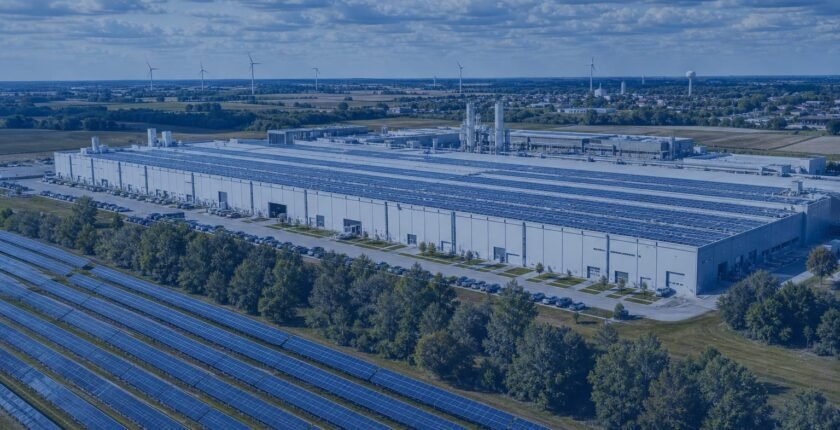
Heliene’s 93 layoffs at the Mountain Iron plant are a local event with national lessons. The company recently invested $10 million to expand Mountain Iron and $16 million in a Rogers facility, the latter tied to a $54 million private-equity investment, yet still cut staff at Mountain Iron. For wind manufacturing, that combination—large capital commitments followed by sudden workforce reductions—illustrates how fragile site-level employment is when incentives and market signals change.
Policy reversals played a direct role in the Heliene trajectory: plans for a third Twin Cities facility collapsed after Congress and the Trump administration cut the solar tax credits that had sustained demand. That pattern—federal incentives creating concentrated growth that can shrink rapidly when politics shifts—is the exact exposure U.S. wind manufacturing must avoid if policymakers want factory jobs to be durable rather than temporary.
What a consistent industrial policy would deliver for wind factories
A consistent industrial policy ties incentives to multiyear demand, workforce development and local ownership, not just upfront capital grants. The Inflation Reduction Act and infrastructure spending under President Joe Biden produced measurable factory investment and hiring; those measures are the most specific federal industrial-policy actions since the New Deal. But the Heliene case shows how incentives that do not lock in demand or build local skills can produce overcapacity and layoffs when the political winds change.
For wind manufacturing that means three concrete design choices: make tax credits or procurement guarantees span multiple project cycles; couple plant grants to local vocational training commitments; and require a share of local-based ownership or long-term offtake contracts. Those mechanics reduce the chance that a factory built with public levers becomes an ephemeral job center when the next policy shift arrives.
Supply chains, tariffs and the grid: the mechanics that change costs
Manufacturing economics hinge on component costs, trade rules and grid integration. Brown’s piece lists plausible drivers of Heliene’s layoffs: higher tariffs on imported cells, the loss of community-solar customers when federal support waned, or simple overexpansion. Each of those mechanics applies to wind: turbine nacelle components, blades and power electronics are global today, so a tariff or an import restriction can raise plant input costs quickly and unevenly.
The other mechanical constraint is the grid. The Star Tribune commentary says the "grid that supports this system is, frankly, a mess," and that matters for wind because transmission gaps determine which projects get built and which factories get orders. Industrial policy for wind must therefore fund transmission and interconnection alongside factory incentives; otherwise manufacturers will have production without markets and communities will see investment follow outages rather than stable demand.
How to make wind jobs stick: training, local firms and contract design
Jobs that return from overseas are not the low-skill roles of decades past: they are more automated and technical. The original piece recommends expanding vocational training; applied to wind, that means certification for turbine technicians, composite manufacturing specialists and controls engineers tied to community colleges and apprenticeships. Requiring grantees to fund or partner with local training providers raises the odds that a plant becomes a long-term community asset.
Local ownership and long-duration procurement contracts matter too. Brown argues small companies rooted in a community tend to last longer than those lured by one-off tax deals; for wind, policy can prioritise projects with local partners or local content thresholds. Finally, program rules that smooth incentives over several years reduce the boom-bust hiring that produced Heliene’s 93 layoffs and the cancelled Twin Cities facility plan.
| Site | Company spend | Private-equity | Layoffs | Status |
|---|---|---|---|---|
| Mountain Iron | $10 million expansion | — | 93 | Plant open; layoffs announced |
| Rogers | $16 million | $54 million private-equity investment | 0 | Plant open; no layoffs reported |
| Twin Cities (planned) | Plans cancelled | — | 0 | Planned facility fell apart after tax credits were cut |
The case for and against industrial-policy success in wind
The case for
- Federal programs such as the Inflation Reduction Act and infrastructure spending have already driven factory investment and hiring, demonstrating that targeted policy can mobilise capital.
- Linking factory incentives to multiyear procurement or transmission buildout would create predictable demand for wind components and reduce the chance of abrupt layoffs like Heliene’s 93 cuts.
The case against
- Political reversals are already reshaping incentives: the 2025 policy turn toward tariffs and reduced renewable credits makes private investors wary of multiyear commitments.
- Global supply chains for key components mean that tariffs or import-cost shifts can quickly erase the cost advantages of U.S. factories, producing overcapacity and job losses.
What to be careful about
- Policy flip-flops that shorten or rescind tax credits or procurement guarantees, which cause rapid hiring followed by layoffs.
- Supply-chain shocks or tariffs that raise input costs for turbines, blades or electronics and render local manufacturing uneconomic.
- Grid transmission and interconnection bottlenecks that leave manufactured components without nearby projects to supply, producing idle capacity.
The bottom line
Heliene’s 93 layoffs and the cancelled Twin Cities expansion are a warning: without consistent, mechanically coherent industrial policy, factory jobs in renewables—whether solar or wind—will follow political cycles and global price swings. For wind manufacturing, policymakers can change that by aligning multiyear procurement, transmission buildout and local workforce training into a single programme design. Those mechanics will not erase competition or automation, but they will make U.S. factories less likely to become brief experiments and more likely to deliver sustained employment and community benefit.
What to watch
- Congressional or administrative actions changing renewable tax credits or procurement guarantees (legislative calendar and rulemaking in 2026–2027).
- Federal or state decisions funding transmission and interconnection projects that would unlock wind build areas.
- Any announced tariffs or import restrictions that affect turbine components or solar cells, since similar moves have affected component costs.
Frequently asked questions
Why are the Heliene layoffs relevant to wind manufacturing?
Heliene’s 93 layoffs at Mountain Iron show how federal incentives, trade moves and demand volatility can turn local investments—$10 million at Mountain Iron and $16 million at Rogers—into short-lived employment. Wind component factories face the same exposure because turbines and blades depend on long-term project pipelines and transmission availability.
Which federal policies have already changed factory investment?
Former President Joe Biden’s infrastructure spending and the Inflation Reduction Act are cited as the most specific U.S. industrial-policy efforts since the New Deal and have driven recent factory investment and hiring, according to the reporting underpinning this analysis.
What program design will keep wind jobs in place?
Design elements that stabilise jobs include multiyear procurement guarantees, tying grants to local vocational training programmes and favouring projects with local partners or content requirements; these reduce boom-bust hiring that produced Heliene’s layoffs.