
Blog
Battery insurance risk from shared grid connections
Estimated reading time: 6 minutes · Last updated:
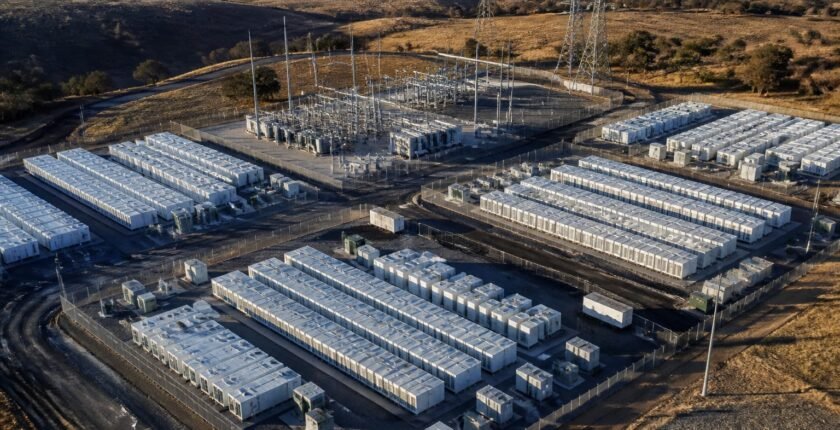
Tokio Marine GX (TMGX) warns that using a single grid export for adjacent solar-plus-storage projects is concentrating insured revenue and creating materially larger loss exposures. Olly Litterick, head of renewables at TMGX, says a single shared export point can produce aggregated losses measured in hundreds of millions of dollars or even billions when multiple projects are affected. The mechanism is simple: co-located battery energy storage systems increasingly rely on common transformers or substations, so a single transformer failure or material-damage event can trigger contingent business interruption across several insured projects. TMGX launched in 2025 and is treating aggregation as its fastest-growing underwriting concern.
"hundreds of millions of dollars or even billions of dollars of exposure in a single location where multiple insureds share grid connection points,"
Olly Litterick, head of renewables at Tokio Marine GX (TMGX)
Key takeaways
- Exposure concentration: Olly Litterick at TMGX warns single shared export points can create exposures of hundreds of millions of dollars or even billions of dollars for colocated BESS.
- Insurer growth: TMGX says BESS is its fastest-growing technology line and reports insured participation of about 8 GW of BESS.
- Claims record: GCube's 2024 dataset indicates that more than half of BESS failures happen during the initial two years after commissioning.
- Cyber gap emerging: TMGX says standard property cover usually excludes cyber, and lenders are only beginning to require cyber insurance for BESS projects.
Table of contents
- Key takeaways
- How shared grid connections concentrate insured revenue
- Why aggregation risk is rising now
- Thermal runaway, early-failure profile and the limited claims record
- The cyber-insurance gap and lender practices
- Case for and against faster cyber and aggregation controls
- What to be careful about
- Frequently asked questions
How shared grid connections concentrate insured revenue
Shared grid connections group several separate projects behind a single export or substation asset. When multiple battery owners use the same transformer or substation, the incident that damages that shared asset does not affect a single policyholder in isolation; it can remove export capability for every project tied to that point.
The practical result is concentrated insured revenue. Olly Litterick says that when a common export point fails through material damage or transformer fault, the resulting contingent business interruption claims can be very large — measured in hundreds of millions of dollars or even billions of dollars for a single site where multiple insureds share the connection. Insurers that underwrite property and loss-of-revenue at individual projects therefore face aggregation risk they did not encounter when each plant had a separate grid take-off.
Controlling that aggregation requires underwriting that maps shared infrastructure, enforces spacing and separation, and prices for the single-point vulnerability rather than for each project's standalone exposure.
Why aggregation risk is rising now
TMGX traces its exposure to a decade-plus trend of co-location and to its own book history: the unit builds on 20 to 25 years of renewable underwriting at GCube and was launched by Tokio Marine in 2025. Rapid deployment of utility-scale BESS 'for the last three to five years' means a growing share of the insured portfolio is still in construction or early operations, where failure rates are concentrated.
That pace of build matters. TMGX reports about 8 GW of BESS in its insured participation, a figure the team calls 'probably slightly outdated' because the book is expanding quickly. James Totton, a TMGX underwriter, has emphasised that single-substation connections become an aggregation problem as more projects tie into the same infrastructure.
Insurers and brokers such as Marsh already stress separation between battery modules and critical infrastructure, and some markets — AXIS among them — offer contingent business interruption cover when a first substation a project does not own is damaged. Even so, underwriting standards must adapt as colocated sites grow in size and complexity.
Thermal runaway, early-failure profile and the limited claims record
Thermal runaway remains the primary driver of probable maximum loss estimates for BESS underwriting. TMGX and GCube data point to an early-failure profile: GCube's 2024 figures show that over half of battery energy storage system failures occur within their first two years of operation, as first reported by pv magazine Global. That front-loaded failure pattern concentrates exposure in new-build portfolios and informs spacing and module-arrangement requirements under policy terms.
Because utility-scale BESS has been widespread only in the past three to five years, the sector's overall claims record is still limited. Litterick notes TMGX has written significant business in California but has not yet experienced earthquake losses on its BESS book. Limited historical loss experience complicates loss modelling for aggregation at common grid nodes.
Underwriters therefore rely on prescriptive site design, module spacing, and construction-stage controls to manage probable maximum losses while insurers and brokers refine metrics for single-point aggregated exposure.
The cyber-insurance gap and lender practices
TMGX says its standard property policy largely excludes cyber perils, and broader cyber cover tends to sit in a specialist market. That creates a gap: physical-damage cover can pay for transformer or substation failure, but cyber-caused loss of export or operator-control may not be covered unless a specific cyber policy is bought.
Litterick told ESS News that project-finance lenders traditionally required property damage and machinery breakdown cover, and that 'we are beginning to see lenders insist that their clients purchase cyber.' He also said cyber cover remains rare as a lender insist at present, though demand from clients and lenders is growing and TMGX is developing a broader solution.
The sector has seen high-profile cyber incidents: in December 2025 an attack on distributed energy assets in Poland highlighted the exposure of dispersed systems and the limits of existing cyber programs. That example has pushed cyber into underwriting conversations alongside aggregation controls.
Case for and against faster cyber and aggregation controls
The case for
- Insurers such as TMGX leading placement and setting terms could standardise requirements on spacing and shared-node exposure, reducing future aggregation losses.
- Rising lender interest in cyber cover would close coverage gaps if lenders make cyber a contractual requirement for project finance deals.
The case against
- Rapid project co-location and growing project size risk outpacing underwriting capacity, leaving firms exposed to single-site losses measured in hundreds of millions or billions of dollars.
- Specialist cyber capacity remains limited and separate from property markets, so a gap can persist even as lenders ask for cover.
What to be careful about
- Large aggregated contingent business interruption losses when a shared transformer or substation fails and several insured projects lose export capability.
- Uninsured or underinsured cyber incidents that interrupt plant control or grid export but fall outside standard property policies.
- Concentration of construction-stage exposure as most of TMGX’s BESS book is still in construction, increasing front-loaded failure risk.
The bottom line
Shared grid connections change where and how BESS exposure accumulates: they move risk from isolated project policies to a node-based model where a single asset failure can cascade across multiple insured owners. TMGX and other market participants are responding by tightening spacing, testing aggregation limits and flagging cyber as an emergent gap. The numbers cited — about 8 GW of insured participation for TMGX, GCube’s 2024 finding that most failures appear within two years, and warnings of hundreds of millions or even billions of dollars at single sites — make clear that insurers, brokers and lenders must align underwriting, contractual requirements and cyber programmes before co-location scales further.
What to watch
- Watch whether major project-finance lenders begin to make cyber insurance mandatory for BESS deals; no date has been set.
- Watch for TMGX to publish details and timing of its broader cyber solution for BESS; no date has been set.
- Watch industry aggregation modelling and any insurer guidance following the report released in May; no date has been set.
Frequently asked questions
How large can aggregated losses at a shared connection point be?
TMGX warns aggregated losses at a single shared export can reach hundreds of millions of dollars or even billions of dollars when multiple insured projects are affected, according to Olly Litterick.
How much BESS does TMGX currently report on its book?
TMGX reports insured participation of about 8 GW of BESS, a figure the underwriters call 'probably slightly outdated' because the book is growing rapidly.
What drives the worst-case loss scenarios for BESS insurers?
Thermal runaway is the main driver of probable maximum loss estimates, and GCube's 2024 data indicate a majority of BESS failures take place within the first two years, concentrating risk early in a project's life.
Related reading