
Blog
Pentagon backs space solar power startup
Estimated reading time: 4 minutes · Last updated:
The Pentagon is financing systems to capture sunlight in orbit and relay the power to Earth, backing Virginia startup Overview Energy in an effort to diversify power for forward military sites. Overview Energy is developing spacecraft intended to transmit the collected electricity to extensive ground solar-collector arrays, a capability the Defense Department sees as a potential alternative to fuel convoys for some installations, as first reported by SpaceNews. The move amounts to early-stage backing of space-based solar power rather than a deployment decision, and it targets resilience where fuel supply lines are vulnerable.
Key takeaways
- Pentagon funding: The Pentagon is financing technology to capture sunlight in orbit and transmit the resulting power to terrestrial sites.
- Startup backed: Overview Energy, a Virginia startup, is developing satellites to transmit energy to large ground solar arrays.
- Operational aim: The investment aims to provide electricity to military installations that rely on vulnerable fuel supply lines.
Table of contents
What the Pentagon has funded
The Department of Defense has moved beyond conceptual study by providing money for systems that would collect sunlight in orbit and route that energy to Earth. The specific award backs Overview Energy, the Virginia company named in the announcement, and supports work on satellites and the ground infrastructure those satellites would serve.
This funding is an early procurement and development step rather than a commitment to deploy an operational constellation. It signals interest in a capability that could reduce reliance on fuel deliveries to forward bases by delivering electricity directly to terrestrial receivers.
How space-to-Earth solar would be used
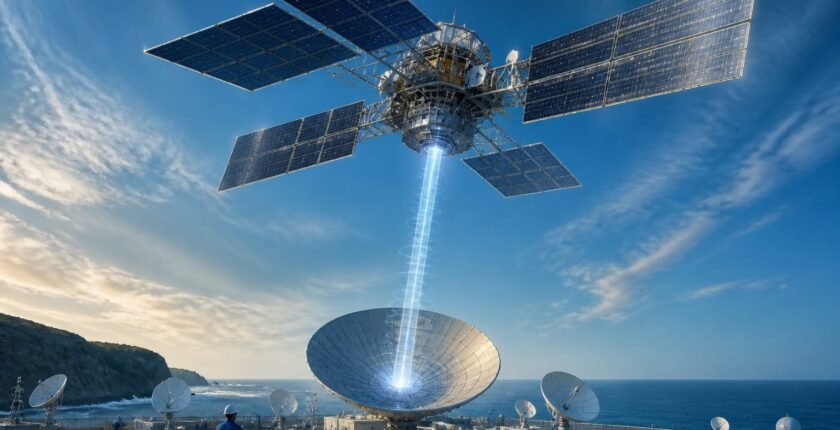
Under the concept, orbiting platforms convert sunlight and beam power down to dedicated ground-based rectennas or expansive solar-collector fields. A Defense Department filing describes satellites intended to deliver harvested solar energy to those large terrestrial arrays; the Pentagon presented that capability as a possible electricity source for military installations.
Military planners view the approach as a logistical hedge: where convoys or local fuels are exposed to attack or disruption, remotely supplied electrical power could sustain communications, sensors and base systems. The current funding supports prototype work, not base-by-base rollouts.
Why the department is interested now
The Defense Department flagged resilience concerns tied to vulnerable fuel supply lines as a driver for the investment. Space-collected solar energy is being evaluated for its potential to bypass those lines, supplying electricity without on-the-ground fuel movement.
Because the announcement names a single startup recipient, the effort remains in an exploratory procurement phase. Observers should treat this as an experiment that the Pentagon hopes can mature into a complementary option for specific, high-risk locations.
Outlook
The case for
- Reduced logistics strain: a functioning link could cut the need for some fuel convoys to forward bases.
- Technology maturation: early Pentagon funding can accelerate prototype testing and attract private capital.
- Operational redundancy: remote power could add a second source alongside local generation and stored fuel.
The case against
- Technical and cost hurdles: converting and beaming energy economically at useful scale remains unproven in practice.
- Security exposure: orbital assets and ground receivers could be targeted or disrupted, complicating defended operations.
- Regulatory and spectrum issues: far-reaching transmit links face licensing and interference challenges before routine use.
What to be careful about
- Anti-satellite or ground-targeting threats could negate the resilience gains the system aims to provide.
- High development costs and uncertain efficiency from orbit-to-ground transmission may limit deployment to niche sites.
- Regulatory, frequency-assignment or international objections could slow demonstrations or cross-border operation.
The bottom line
The Pentagon's backing of Overview Energy signals targeted interest in space-collected solar as a resilience tool for bases that face supply-line risk. The award funds development rather than deployment, keeping the effort at prototype and demonstration scale for now. Success would hinge on lowering transmission costs, proving reliable links between orbit and ground receivers, and addressing security and regulatory hurdles. For the Defense Department the appeal is clear: an electrical supply that does not depend on vulnerable convoys could change logistics for some missions, but the concept still faces substantial technical and policy barriers before it can be fielded.
What to watch
- Watch for Pentagon announcements on follow-on funding for space-solar prototypes; no date has been set.
- Watch for Overview Energy to publish a demonstration schedule or technical milestones; no date has been set.
- Watch for DoD solicitations or contracts that expand the program beyond a single recipient; no date has been set.
Frequently asked questions
Who received Pentagon funding to develop space solar power?
The funding named Overview Energy, a Virginia startup, as the recipient for work on satellites and ground infrastructure to transmit space-collected solar energy to Earth.
What problem is the Pentagon trying to solve with space solar power?
The Pentagon described the effort as a way to supply electricity to military installations that rely on vulnerable fuel supply lines, aiming to reduce the need for some fuel convoys.
Does this announcement commit the Pentagon to an operational system?
No; the funding supports prototype and development work rather than a decision to deploy an operational constellation, so it is an exploratory step.
Related reading