
Blog
2026 Chevrolet Silverado EV Trail Boss review
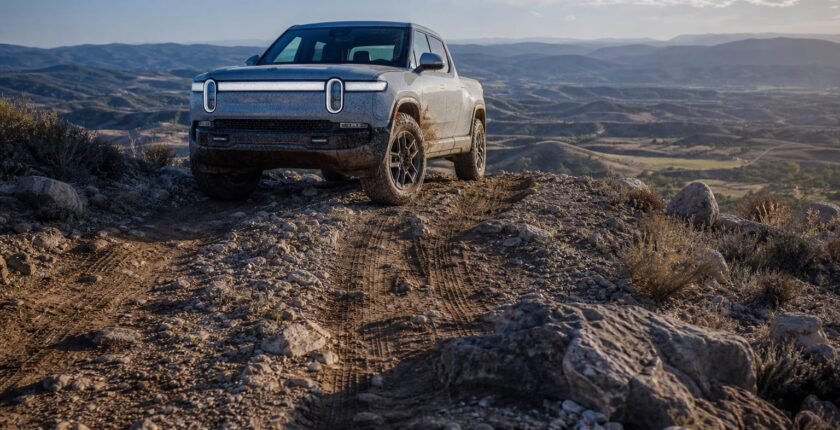
Estimated reading time: 5 minutes · Last updated: 2026-08-20
The 2026 Chevrolet Silverado EV Trail Boss is a five-passenger, dual-motor electric pickup that aims to marry genuine off-road capability with long-range electric driving. It delivers 725 hp and 775 lb.-ft. to an all-wheel-drive system, accelerates from 0-60 mph in 4.5 seconds and—when fitted with the Max Range package—Chevrolet lists 478 miles between charges. Pricing starts at $55,895 with the tested truck costing $93,185, and the model is assembled in Detroit, MI. This review draws on Casey Williams’s hands-on reporting as first reported by The Journal Gazette.
Key takeaways
- Power: The Trail Boss uses dual motors to produce 725 hp and 775 lb.-ft., reaching 0-60 mph in 4.5 seconds.
- Range and charging: With the Max Range package Chevrolet lists 478 miles and a 10–80% DC fast charge time of 50 minutes; a 240-volt home charge takes about 13 hours.
- Towing and payload: Towing capacity is 10,200 lbs., and Chevrolet warns heavier towing cuts range by about half of the stated 478 miles.
- Price and origin: Base price is $55,895, the tester was $93,185, and the truck is built in Detroit, MI.
Table of contents
- Key takeaways
- Power and on-road performance: immediate torque, big-truck momentum
- Range and charging: long-haul numbers, but towing is expensive
- Work, hauling and trail capability: practical bed features and genuine tow numbers
- Cabin, controls and buyer trade-offs: tech that impresses but some odd omissions
- How the Trail Boss could play out in the market
- What to be careful about
- Frequently asked questions
Power and on-road performance: immediate torque, big-truck momentum
The Trail Boss’s powertrain is built around lithium-ion batteries and a pair of electric motors that drive all four wheels. The system rating—725 hp and 775 lb.-ft.—translates into a launch that feels closer to a performance SUV than a heavy-duty pickup; Chevrolet’s published 0-60 mph time is 4.5 seconds. That instantaneous torque also highlights the difference between internal-combustion pickups and EVs: the truck’s mass moves with electric immediacy, while the chassis and braking must work to rein it in.
Four-wheel steering is part of the package, and it materially shortens turning sweeps so the Trail Boss handles traffic and curb-side maneuvers more like a mid-size truck than an 8,800-lbs. vehicle. The combination of regenerative brakes and conventional discs front and rear gives predictable pedal feel whether crawling or charging back energy on descents.
Range and charging: long-haul numbers, but towing is expensive
Chevrolet’s Max Range configuration is the headline figure here: 478 miles between charges as stated by the manufacturer. Fast charging to restore battery state from 10% to 80% is advertised at about 50 minutes, while a 240-volt Level 2 home charger will take roughly 13 hours for a full replenishment. Those charging figures flow from the vehicle’s large battery pack, which Chevrolet does not specify in kilowatt-hours in the review.
Owners should plan realistically for heavy loads: Chevrolet notes you lose about half the stated range when towing heavier trailers. Using that guidance, a loaded towing session can reduce usable range from 478 miles to roughly 239 miles, so route planning and campground or marina charging access become essential for extended trips.
Work, hauling and trail capability: practical bed features and genuine tow numbers
The Trail Boss keeps truck utility front and center. It carries a Midgate that folds the rear cab wall to extend the bed, a Multi-Flex Tailgate that converts to a step or extender, spray-in bedliner and multiple bed-side power outlets for tools or tailgate catering. Chevrolet also points to a front trunk for stowing gear and provides outlets there as well.
On towing, Chevrolet lists 10,200 lbs. capacity; the truck can also accept bulky payloads — the review notes the vehicle can carry the weight of a small car in the bed. Red tow hooks, 18-inch wheels with all-terrain tires and protective underbody elements give the Trail Boss off-road cred, while cameras, a wide head-up display and an integrated trailer brake controller ease real-world hitching and backing.
Cabin, controls and buyer trade-offs: tech that impresses but some odd omissions
The interior is described as ruggedly finished with features such as a 17.7-inch infotainment screen, Bose audio, wireless phone charging and heated plus ventilated front seats. Comfort and finish skew toward a work-ready aesthetic while still supplying creature comforts for long drives.
There are practical gripes: Chevrolet declines to support Apple CarPlay or Android Auto, a decision the review highlights with a quoted GM response of "No," and several vehicle functions—headlamp control and an automated shut-down—are routed through the central touchscreen rather than physical switches. Hands-off Super Cruise is available on approved highways and the Safety Alert Seat provides haptic warnings; both are positioned as safety complements alongside conventional systems.
| Model | Position |
|---|---|
| Rivian R1T | Competitor named by the reviewer |
| Tesla Cybertruck | Competitor named by the reviewer |
| GMC Sierra EV AT4 | Platform-sibling competitor named by the reviewer |
How the Trail Boss could play out in the market
The case for
- The combination of 725 hp, instant electric torque and four-wheel steering could broaden EV uptake among buyers who previously rejected trucks on performance grounds.
- A manufacturer-stated 478-mile Max Range addresses range anxiety for long-distance light-commercial and recreational use, supporting adoption where charging networks exist.
The case against
- Substantial range loss when towing (about half) makes heavy-use truck buyers reliant on route-specific charging, which can reduce practicality on remote hauls.
- The decision not to support Apple CarPlay or Android Auto and to place some core controls behind a touchscreen may deter buyers who value simple, tactile switches for daily work use.
What to be careful about
- Real-world towing can cut the stated 478-mile range by about half, creating longer-than-expected charging stops for RV and boat towing use.
- The as-tested price of $93,185 versus a $55,895 base highlights exposure to option-driven cost escalation for buyers.
- Driver frustration and potential safety issues from moving headlamp and shutdown controls into the touchscreen rather than separate physical controls.
The bottom line
The Silverado EV Trail Boss is Chevrolet’s answer to buyers who want a genuinely capable electric pickup that can both tow and play off-road while delivering performance that challenges conventionally powered trucks. Its headline strengths are 725 hp, 775 lb.-ft. and a manufacturer-stated 478-mile Max Range, but buyers must weigh those numbers against option-driven prices and the steep drop in range when towing heavy loads. For shoppers who prioritize range, towing numbers and on-board utility over smartphone integration, the Trail Boss is a compelling entry; for buyers who need simple, tactile controls or the lowest possible acquisition cost, the trade-offs are significant.
What to watch
- watch for Chevrolet dealer allocation and standard-option announcements; no public date has been set.
- watch for published EPA or agency testing that confirms the 478-mile figure; no testing date is provided in the review.
Frequently asked questions
What is the Silverado EV Trail Boss’s towing capacity?
Chevrolet lists the towing capacity at 10,200 lbs., and the review warns that towing heavier trailers can reduce usable range by about half of the stated 478 miles.
How fast does the Trail Boss charge?
Chevrolet advertises a DC fast-charge time of 10–80% in around 50 minutes; filling from a 240-volt Level 2 home charger takes roughly 13 hours according to the review.
How does the Trail Boss handle in tight spaces for a big truck?
Four-wheel steering is fitted and lets the Trail Boss maneuver more like a mid-size pickup, improving curb-side turns and parallel parking despite the truck’s roughly 8,800-lbs. mass.
Related reading
This article is information, not financial advice. Anyone acting on it should do their own checks.