
Blog
Xiaomi SU7 Tops 500,000 Deliveries
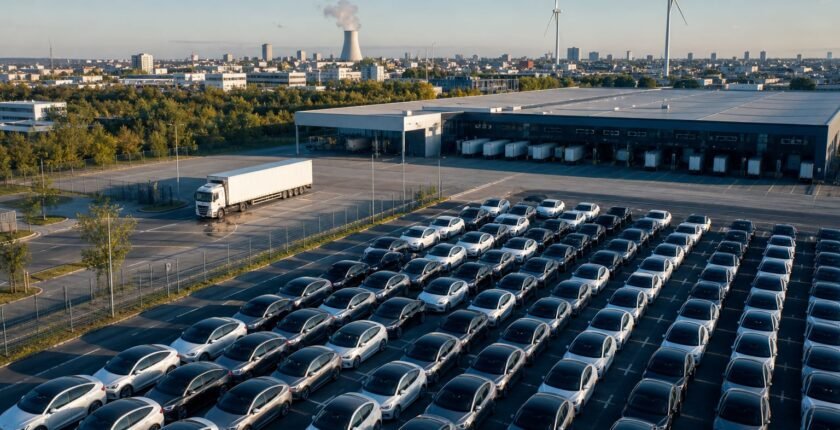
Estimated reading time: 6 minutes · Last updated: 2026-08-20
Xiaomi’s SU7 sedan has reached a major production milestone: cumulative deliveries have passed 500,000 units, less than three years after the first cars reached customers in April 2024. As first reported by Electric Cars Report, the company recorded 21,044 SU7 deliveries in July 2026 and has shipped more than 760,000 vehicles across its lineup including the SU7 Ultra and YU7. Those volumes sit alongside rising sales and revenue: Xiaomi reported RMB 24.9 billion from its smart EV, AI and other new initiatives in Q2 2026, with RMB 23.9 billion of that identified as smart EV revenue. This piece explains what the numbers mean for Xiaomi’s business, its product strategy and its push into Europe.
Key takeaways
- Milestone: Xiaomi’s SU7 sedan has surpassed 500,000 cumulative deliveries since first deliveries in April 2024.
- Monthly volume: Xiaomi delivered 21,044 SU7 cars in July 2026, and recorded more than 100,000 deliveries in the first seven months of 2026.
- Company scale: Across its models — SU7, SU7 Ultra and YU7 — Xiaomi has delivered over 760,000 vehicles to date.
- Financials: In Q2 2026 Xiaomi reported RMB 24.9 billion from its smart EV, AI and other new initiatives, with RMB 23.9 billion coming from smart EV revenue.
Table of contents
- Key takeaways
- Why the 500,000 mark matters for Xiaomi’s automotive push
- What the numbers show about Xiaomi’s EV business health
- Product strategy: sedans, SUVs and extended‑range models
- Europe and the next test of industrial scale
- How Xiaomi’s automotive story could play out
- What to be careful about
- Frequently asked questions
Why the 500,000 mark matters for Xiaomi’s automotive push
Hitting half a million SU7 deliveries shows Xiaomi’s auto unit has graduated from pilot to sizable production brand in China’s crowded EV sector. The first SU7 arrived with customers in April 2024; reaching this scale in about 28 months demonstrates the company can convert smartphone and smart‑home distribution reach into vehicle volume at pace. That reach is relevant because the SU7 is now one pillar among several — the firm reports more than 760,000 total vehicle deliveries when the SU7, SU7 Ultra and YU7 are combined, which alters how Xiaomi is positioned with suppliers, dealers and software partners.
Volume alone does not guarantee profitability, but scale changes the economics available to Xiaomi. Delivering larger runs gives the company leverage on component sourcing and allows it to amortise engineering and software investments across more units. At the same time, the SU7’s speed to this milestone also raises the bar for supporting sales channels and aftersales service, both inside China and abroad as Xiaomi plans to expand into Europe in 2027.
keyPhrase
SU7 cumulative deliveries surpassed 500,000
What the numbers show about Xiaomi’s EV business health
Xiaomi’s quarterly reporting shows the car division is already a material revenue contributor. For Q2 2026 the company recorded RMB 24.9 billion from the combined smart EV, AI and new initiatives segment, with RMB 23.9 billion explicitly identified as smart EV revenue. Vehicle shipments in the quarter reached 104,199 units, a 28.2% increase year on year, indicating production and sales growth at scale.
Profitability signals are present but mixed: Xiaomi reported total quarterly revenue of RMB 108.9 billion and an adjusted net profit of RMB 6.2 billion despite rising component costs and competitive pressure. Those figures suggest the car unit is contributing to group results already, but the company still faces margin pressure from the intense pricing and capacity environment in China. Xiaomi has set a delivery target of 550,000 vehicles for 2026, which will be a clear test of whether the current momentum converts into the top‑line outcomes management expects.
keyPhrase
RMB 23.9 billion of that total
Product strategy: sedans, SUVs and extended‑range models
Xiaomi is not relying on a single model to drive future growth. The SU7 sits in the premium sedan segment and has a performance sibling in the SU7 Ultra; the YU7 addresses the fast‑growing SUV market and has won high marks in China’s C‑ICAP and C‑NCAP safety and systems testing. Broadening the line-up helps Xiaomi reach different buyer types while defending against single‑model demand swings.
In mid‑2026 Xiaomi also moved into extended‑range architecture with the Kunlun Technical Architecture and the SkyNomad family. The SkyNomad N90 Max is notable for its 76 kWh Xiaomi Armor Scale Battery and a claimed CLTC combined range of up to 1,705 km, a specification Xiaomi hopes will appeal to buyers reluctant to rely purely on battery range for long trips. That multi‑track product approach — premium sedan, SUV and extended‑range models — is intended to smooth sales seasonality and widen the company’s addressable market.
keyPhrase
SkyNomad N90 Max
Europe and the next test of industrial scale
Xiaomi has begun establishing a retail presence in Europe in 2025 and intends to start vehicle sales there from 2027, an expansion that would expose the brand to tariffs, local regulations and incumbent competitors. Chinese automakers already made a measurable impact in Europe: they accounted for 14.2% of the region’s EV market in the first half of 2026, evidence that European consumers are open to Chinese brands but also a reminder that competition is firming.
Entering Europe will require Xiaomi to build local sales and service networks and to adapt vehicles to regional safety and emissions standards where needed. Success would materially expand Xiaomi’s potential customer base beyond China and create another growth runway; failure or slow uptake in Europe would make China’s price war the sole battleground for growth. How Xiaomi balances investment in local infrastructure with maintaining margin discipline will determine whether the company’s automotive ambitions scale profitably outside its home market.
keyPhrase
begin selling its vehicles in the region from 2027
| Model | Role | Notable figure |
|---|---|---|
| SU7 | Premium electric sedan | First deliveries April 2024; cumulative deliveries >500,000 |
| SU7 Ultra | Performance variant | Part of the 760,000+ total deliveries across models |
| YU7 | Electric SUV | High ratings in C‑ICAP and Five‑Star Plus C‑NCAP |
| SkyNomad N90 Max | Extended‑range SUV | 76 kWh battery; claimed CLTC combined range up to 1,705 km |
How Xiaomi’s automotive story could play out
The case for
- Scale-driven cost reductions as production and supplier leverage increase.
- Broader lineup and SkyNomad extended‑range models attract customers who avoid pure BEVs, supporting volume growth.
- Successful European launch in 2027 would open a large new market and diversify revenue.
The case against
- Continued price pressure and manufacturing overcapacity in China erode margins despite higher volumes.
- Failure to accelerate deliveries risks missing the 550,000 2026 target and disappointing investors.
- European expansion costs and regulatory adaptation could delay profitable growth outside China.
What to be careful about
- Intense Chinese EV price competition that reduces per‑vehicle margins.
- Dependence on achieving large incremental volume to justify platform and software investments.
- Execution risk around building European sales and aftersales infrastructure.
The bottom line
Xiaomi’s SU7 surpassing 500,000 deliveries in under three years is a clear milestone that converts an experiment into an industrial‑scale operation. The company already records substantial smart EV revenue and has diversified its product range with SUVs and extended‑range models, which should broaden demand. The immediate tests are operational: turning current momentum into the 550,000 deliveries Xiaomi targets for 2026 and executing a profitable market entry in Europe from 2027. How Xiaomi manages price competition at home while funding international roll‑out will determine whether the car business is a durable profit centre or an expensive growth engine.
What to watch
- Watch whether Xiaomi reaches its 550,000 vehicle delivery target for 2026; no date has been set.
- Watch for Xiaomi to begin selling vehicles in Europe from 2027, a move the company has signalled for that year.
Frequently asked questions
How fast did Xiaomi reach 500,000 SU7 deliveries?
Xiaomi delivered its first SU7 in April 2024 and reached cumulative SU7 deliveries above 500,000 about 28 months later, a pace the company says reflects its ability to scale production and distribution quickly.
How important are EVs to Xiaomi’s revenue?
In Q2 2026 Xiaomi reported RMB 24.9 billion from its smart EV, AI and other new initiatives segment, with RMB 23.9 billion identified as smart EV revenue, signalling the vehicle business has become a material revenue driver for the group.
What are the main risks to Xiaomi meeting its 2026 delivery target?
The biggest risks are China’s intense price competition and manufacturing overcapacity, which can compress margins, and the need to accelerate shipments after the first seven months of the year, since those months accounted for roughly 39% of the 550,000 annual target.
Related reading
This article is information, not financial advice. Anyone acting on it should do their own checks.